
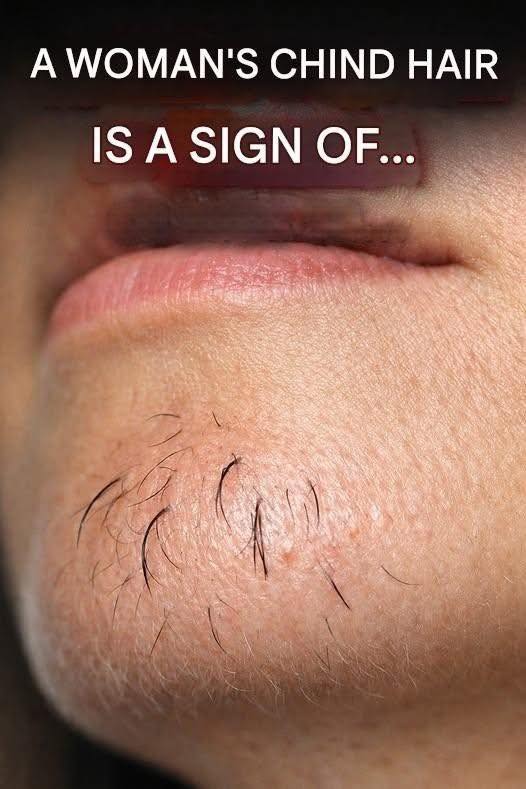
Finding a few dark chin hairs is usually nothing to worry about and is often completely normal. But when the growth becomes more noticeable, thicker, or appears suddenly, it can sometimes indicate shifts in hormone levels.
A major factor behind this is a group of hormones called androgens, including testosterone. Women naturally produce small amounts of these hormones, which play important roles in energy, mood, and reproductive health. However, when androgen levels increase—or when the body becomes more sensitive to them—they can stimulate coarse hair growth in areas such as the chin, upper lip, or chest. This condition is known as hirsutism.
One of the most common underlying causes is polycystic ovary syndrome (PCOS), a hormonal condition often associated with elevated androgen levels and insulin resistance. It may also come with other symptoms like irregular periods, acne, weight changes, or thinning scalp hair.
Hormonal shifts during life stages such as menopause can also contribute. As estrogen levels decline, the effects of androgens may become more noticeable, even if their levels remain stable.
In some cases, there is no identifiable medical cause. This is referred to as idiopathic hirsutism, where hair follicles respond more strongly to normal hormone levels. Genetics often plays a significant role in these cases.
Certain medications, including anabolic steroids or drugs like minoxidil, may also trigger increased hair growth as a side effect.
Rarely, more serious conditions such as adrenal disorders or Cushing’s syndrome may be involved, typically alongside other clear symptoms.
If chin hair growth appears suddenly, progresses quickly, or is accompanied by other changes such as irregular periods, acne, or voice changes, it’s advisable to consult a healthcare professional for evaluation.
Leave a Reply