
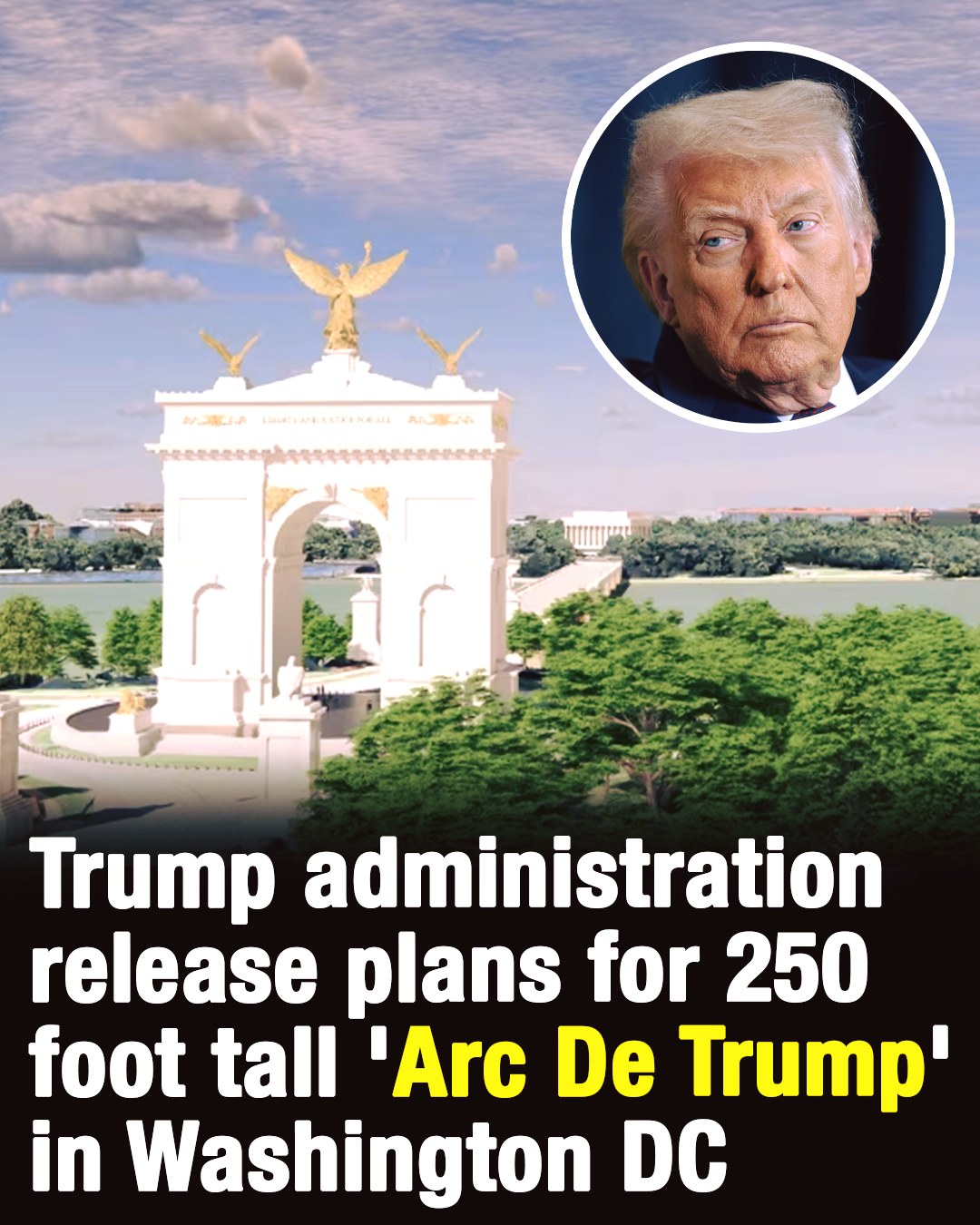
Recent discussions across political and media circles have brought attention to a proposed monument concept associated with Donald Trump, sparking debate about symbolism, legacy, and the future of public space in Washington, D.C..
Often referred to informally as the “Arc de Trump,” the idea draws comparisons to the Arc de Triomphe in Paris, a historic structure commissioned by Napoleon Bonaparte to commemorate military achievements. The proposed concept envisions a similarly grand arch adapted to reflect American themes such as patriotism, national identity, and historical continuity.
Reports suggest that early discussions emerged in private settings, where conceptual designs and visual mockups were shared as part of broader conversations about legacy projects. At times, Trump has referenced the idea in relation to the visual layout of the capital, noting areas he viewed as potentially suitable for additional monumental architecture.
One location frequently mentioned in discussions is the area surrounding the Lincoln Memorial, a site already central to the nation’s commemorative landscape. Washington, D.C. is home to iconic monuments honoring figures such as George Washington and Thomas Jefferson, making any proposed addition a subject of careful consideration.
Descriptions of the concept suggest a structure reaching roughly 250 feet in height, which would make it one of the most prominent features in the area. Design elements in circulating mockups include a central arch framed by columns, sculptural eagles, and symbolic figures. Some versions depict imagery inspired by the Statue of Liberty, reinforcing themes of freedom and national identity, along with inscriptions such as “One Nation Under God.”
While these visuals have gained attention online, no officially approved plan has been confirmed. In reality, any new monument in Washington would require extensive review by bodies such as the National Capital Planning Commission and the U.S. Commission of Fine Arts, along with environmental assessments, public input, and congressional authorization.
Public reaction has been divided. Supporters frame the idea as a bold architectural statement that could connect modern political history with longstanding traditions of commemoration. Critics, however, argue that monuments in the capital should reflect long-term historical consensus rather than recent or contested political figures.
Urban planners and historians also point out that Washington, D.C. was carefully designed with balanced sightlines, open spaces, and symbolic alignment. Introducing a structure of significant scale could disrupt that balance, raising questions about preservation versus modernization.
The discussion also reflects a broader trend: the growing role of digital renderings and conceptual imagery in shaping public perception. Advances in design technology allow proposals to appear highly realistic even before entering formal approval processes, sometimes blurring the line between concept and confirmed project.
At its core, the “Arc de Trump” conversation highlights enduring questions about how societies choose to commemorate leaders, how public spaces evolve, and how symbolism is interpreted across political and cultural lines. Whether viewed as visionary, controversial, or purely hypothetical, the idea underscores the powerful intersection of architecture, politics, and public memory.
Leave a Reply