
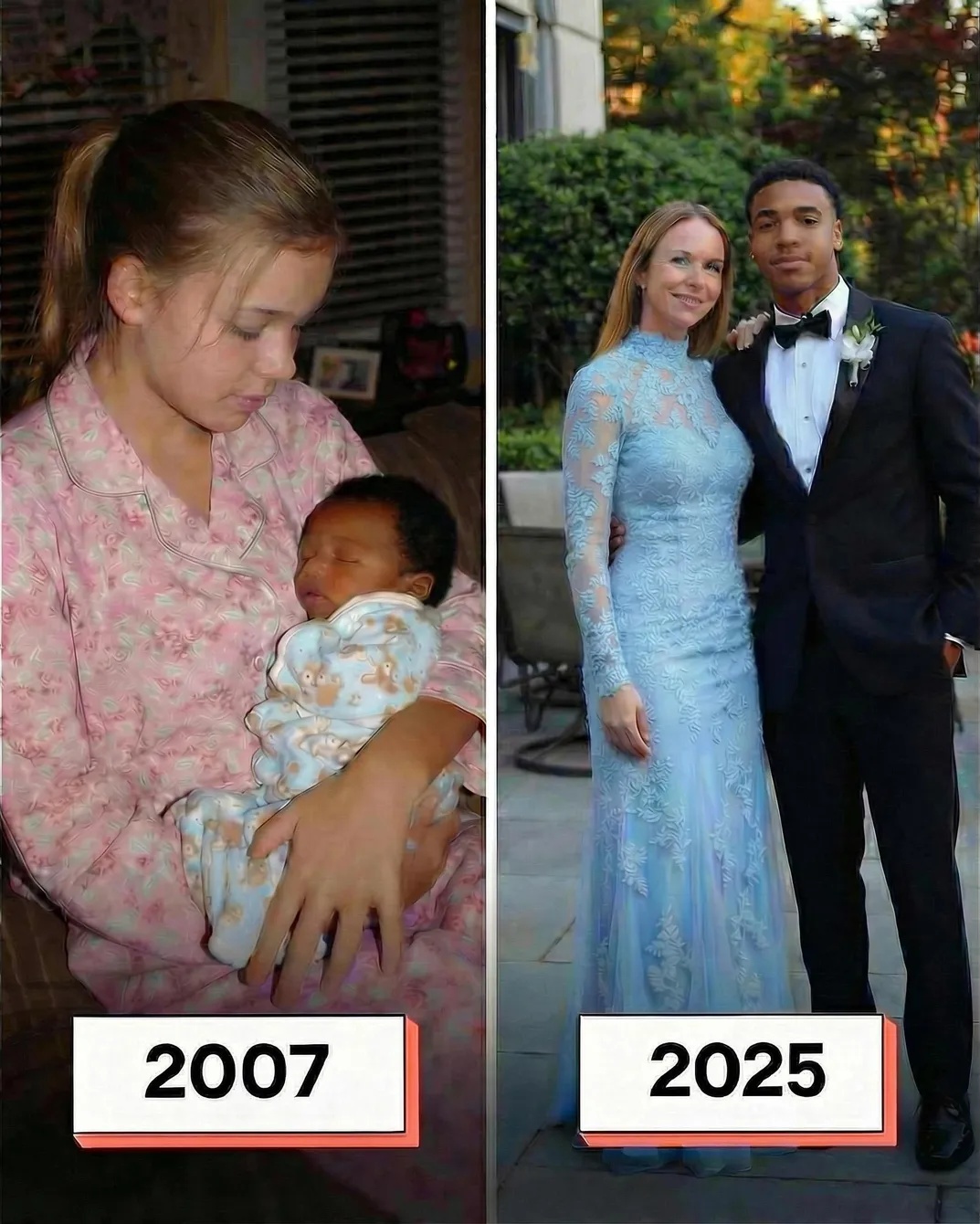
He hadn’t invited Emma to prom to make a statement.
He did it because, after years of watching her work herself to the bone, he finally understood what love actually required of him: not quiet gratitude from the sidelines, but public recognition of everything she had carried alone.
She walked into that gym holding years of sacrifice no one else had fully seen—late shifts that stretched past midnight, missed milestones, dreams folded away like clothes she never had time to unpack. To some, she was still just the “too-young mom” who had made mistakes too early in life.
But to him, she was the reason he’d made it anywhere at all.
When the principal eventually spoke, the noise in the room softened. Conversations faded. The laughter that had once been sharp and careless didn’t quite know where to land anymore, so it disappeared.
What replaced it wasn’t sudden admiration—it was awareness.
People stopped seeing a stereotype and started seeing a person: a woman who had stayed when leaving would have been easier, who had worked when quitting might have been justified, who had loved in a way that cost her almost everything she was supposed to have at that age.
The applause, when it came, didn’t undo the hard years. It didn’t rewrite the sacrifices or return what she’d lost.
But it did something quieter and more lasting.
It gave her story weight in her own eyes.
Emma left that night not as someone defined by what she missed, but as someone finally allowed to be seen for what she built—and to be proud of it.
Leave a Reply