
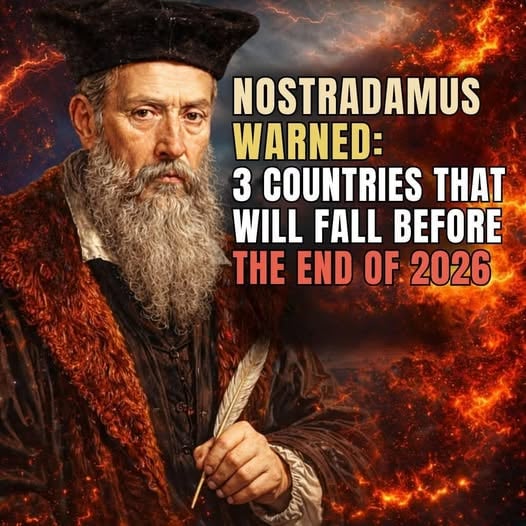
Nostradamus has never drawn his influence from exact predictions, but from the space he leaves open to interpretation. His cryptic images—a weakened eagle, a cornered bear, a fading lion—feel striking today not because they clearly foretell events, but because they reflect tensions already present: doubts about American leadership, pressure on Russia amid conflict and isolation, and Britain’s ongoing questions about its role and identity. His words resonate less as prophecy and more as a familiar pattern playing out once again.
What those verses ultimately reveal is not a predetermined fate for nations, but a reflection of human uncertainty. History has shown that powers rise, falter, and adapt; alliances shift; societies endure. The enduring relevance of these quatrains lies in how they capture that cycle. Rather than signaling inevitable decline, they highlight a constant truth: instability is part of the story, but so is renewal. Between moments of doubt and recovery, it is still people—not prophecy—who decide what comes next.
Leave a Reply