
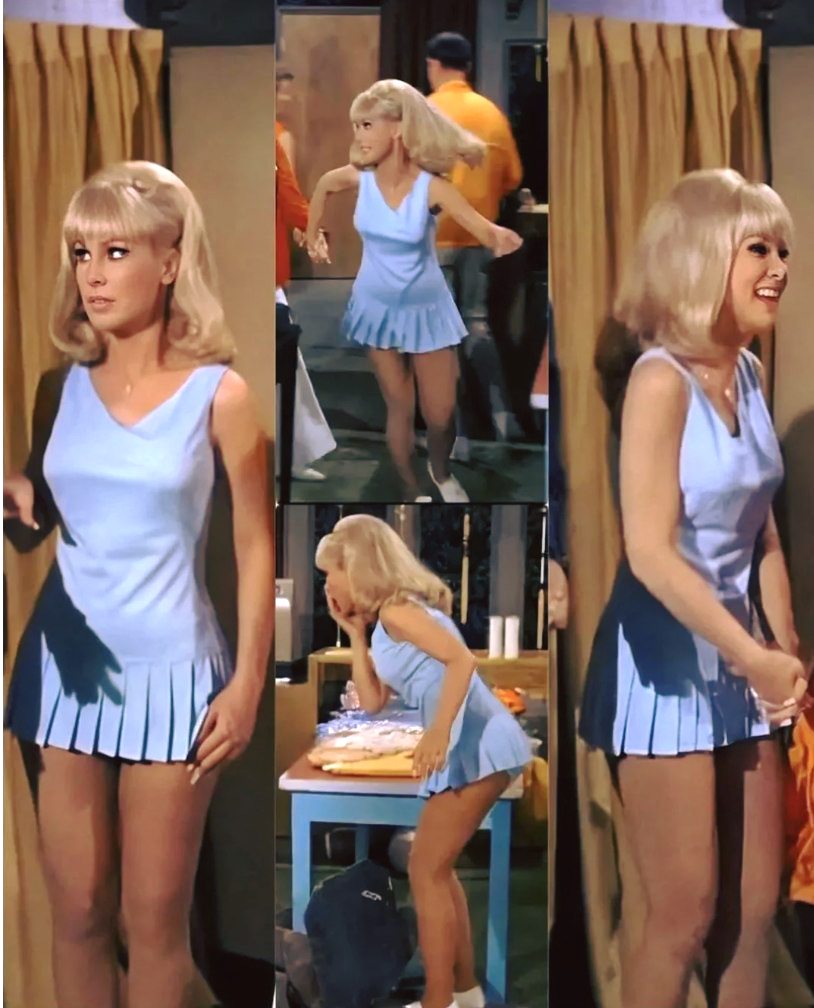
Growing up during television’s golden era, audiences around the world were captivated by the charm and charisma of Barbara Eden. Her role in I Dream of Jeannie became one of the most recognizable images in classic American entertainment—a blend of fantasy, humor, and warmth that continues to resonate decades later.
At the center of the series was the playful and affectionate dynamic between Jeannie and Major Tony Nelson, portrayed by Larry Hagman. Their chemistry gave the show its emotional core, balancing lighthearted comedy with moments of genuine connection. Eden’s performance, in particular, stood out for its innocence, wit, and subtle depth, turning what could have been a simple character into something far more memorable.
Yet part of the show’s lasting appeal lies not just in its storytelling, but in its imperfections. Like many productions of the 1960s, it carried small inconsistencies and charming bloopers that now feel like part of its identity.
In early episodes, attentive viewers might notice details that break the illusion—such as mismatched landscapes, where desert scenes include vegetation that doesn’t quite belong, or props and costumes that reflect practical limitations rather than strict realism. Military details, like uniforms or ranks, occasionally miss the mark, reminding us that accuracy sometimes took a backseat to storytelling.
Barbara Eden’s iconic costume also became part of television history. Designed to be both playful and elegant, it had to adapt to the stricter broadcasting standards of the time. Early wardrobe inconsistencies led producers to ensure greater coverage, reflecting the era’s sensitivity to what could be shown on screen.
Special effects, though innovative for their time, often revealed their mechanics. Floating scenes sometimes exposed wires, and magical moments occasionally showed hints of the equipment used to create them. Rather than diminishing the experience, these glimpses now offer insight into the creativity and craftsmanship behind pre-digital television.
The series also featured early appearances from rising stars like Farrah Fawcett, adding another layer of historical interest for modern viewers revisiting the show.
Behind the scenes, the production required constant adaptability. Eden’s real-life pregnancy during early filming meant careful planning to maintain continuity, while writers and directors worked to keep the show fresh across multiple seasons. Supporting actors, including Hayden Rorke as Dr. Bellows, brought stability and depth that grounded the show’s fantastical elements.
Even the famous genie bottle had humble origins, repurposed from an ordinary decorative decanter—a small but perfect example of the ingenuity that defined television production at the time.
Ultimately, the magic of I Dream of Jeannie doesn’t come from perfection. It comes from heart, imagination, and the collaborative effort of people bringing an impossible idea to life. The small flaws—shifting props, visible wires, continuity slips—only make it more human, more relatable.
Today, revisiting the show offers more than nostalgia. It provides a window into an era of storytelling where creativity often outpaced resources, and where charm could carry a scene further than technology ever could.
That’s why it endures—not as a flawless production, but as a timeless one.
Leave a Reply