
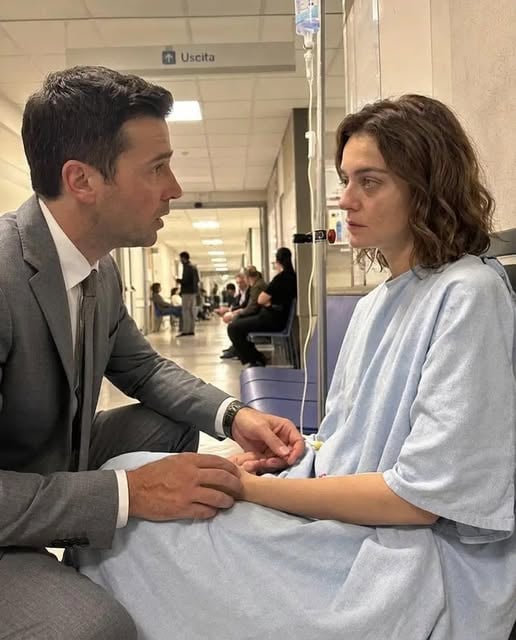
I walked into that hospital room still clinging to the version of our marriage I had built in my head—that she had simply shut down, that she had walked away from us emotionally long before the papers were signed.
But what I found wasn’t that story at all.
It was the truth.
Maya hadn’t “checked out.” She had been drowning quietly for years in a way I never learned how to recognize. What I once labeled as distance was something far heavier: a slow collapse under anxiety, depression, and a cycle of medication changes she had been trying to manage alone.
And I hadn’t seen it.
Worse—I had misread it as indifference.
The realization didn’t arrive all at once. It came in pieces: the exhaustion I dismissed, the silence I took personally, the nights she stopped explaining herself because she no longer believed she would be understood.
By the time I understood even a fraction of it, I could already feel the weight of everything I had failed to notice.
Shame hit first. Then panic. Then a hollow kind of grief that didn’t belong to death, but to neglect.
Maya didn’t speak much that day. She didn’t need to. Her silence was no longer empty—it was full of everything she had been carrying without me.
And I had been angry at that silence.
In the weeks that followed, everything slowed down.
There were no dramatic reconciliations, no sudden fixing of what had already fractured. We didn’t rebuild what we had been. That version of us didn’t survive, and forcing it back would have only repeated the same damage in a different shape.
Instead, I started showing up differently.
Therapy rooms replaced arguments. Appointments replaced assumptions. And for the first time, I learned what it meant to listen without trying to rewrite what I was hearing into something easier to accept.
Maya spoke when she was ready. I learned to wait.
Some days were still heavy. Some conversations still cracked open old wounds we hadn’t fully understood. But there was a shift—quiet, real, and earned through discomfort rather than hope.
What formed between us wasn’t a restored marriage.
It was something more honest than that.
A relationship rebuilt on boundaries we should have had earlier, on truth we no longer avoided, and on a respect that didn’t depend on pretending the past hadn’t happened.
I didn’t get my old life back.
I got something harder.
Something that required accountability instead of nostalgia.
And for the first time, I understood that seeing someone clearly isn’t the end of love—it’s the beginning of responsibility.
Leave a Reply