
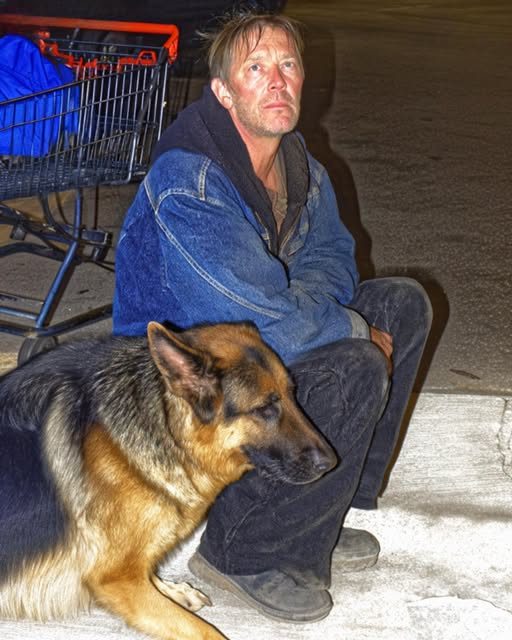
I was rushing home to my kids after another exhausting day at the office when I saw a man sitting in the cold with his dog. I bought them food without thinking twice. I never imagined that small moment would cost me my job—and end up completely changing the course of my life.
I worked as an administrative assistant at a small insurance office. It was the kind of place where you were invisible unless something went wrong. My days were filled with scheduling, paperwork, and constant deadlines, but my focus was always the same—getting home to my children.
They’re five and seven. Loud, emotional, full of energy—and the reason I kept pushing through everything.
Since my ex-husband left two years ago, saying family life “wasn’t for him,” it had just been me. A constant balancing act of work, parenting, and relying on my mom whenever she could help. That day, she had just finished a long hospital shift and sounded completely drained when we spoke.
“Do you mind if I let them watch TV for a bit?” she asked quietly. “I just need to sit down.”
I told her of course. She was already doing more than enough.
On my way home, I stopped at the grocery store for a quick dinner—nothing special, just the usual survival meals to get us through the night. By the time I stepped back outside, the air had turned colder, and the parking lot felt nearly empty.
That’s when I noticed him.
He was sitting near the cart return, hunched against the wind. Beside him was a German Shepherd, calm and alert, staying pressed close as if refusing to leave his side. The dog looked well-fed. The man did not.
When he saw me glance over, he spoke carefully.
“Ma’am… sorry to bother you. I’m a veteran. We haven’t eaten since yesterday. I don’t need money—just something to eat, if you can help.”
I hesitated. It was late. I was alone. Every instinct told me to keep walking.
But something about his voice—steady, respectful, not begging—made me stop anyway.
“Give me a minute,” I said.
I went back inside and bought a hot meal, a large bag of dog food, and water. When I brought it out, he looked at the bags like he couldn’t quite believe they were real.
“I don’t even know what to say,” he said, his voice breaking.
“You don’t have to,” I told him. “Just take care of yourself—and him.”
The dog gave a slow wag of its tail. I left shortly after, thinking that was the end of it.
I didn’t expect it to matter again.
A month later, my boss called me into his office.
The moment I walked in, I knew something was wrong.
“Close the door,” he said.
I sat down, confused.
“This is about something you did a few weeks ago,” he said, sliding an envelope across the desk. “In a parking lot. A veteran. A dog.”
My heart dropped.
Inside was a letter from a veterans’ support organization. It explained that the man I had helped had come to them days after that night. He said the encounter pushed him to finally ask for help. They credited that moment as the beginning of his recovery.
Before I could process it, my boss leaned back, visibly irritated.
“So now outside organizations are getting involved in my workplace?” he said.
“I didn’t ask for any of this,” I said quickly. “I didn’t even know about it.”
But his mind was already made up.
“This kind of attention isn’t acceptable here,” he said flatly. “It reflects poorly on the company.”
Within minutes, I was told to pack up my desk.
I left in shock, barely able to understand what had just happened.
That night, I read the letter again and again, trying to make sense of it. The next morning, I called the organization.
They invited me in.
When I arrived, they explained everything. The man I had helped had entered their program, accepted support, and begun rebuilding his life. He had specifically asked them to find me and thank me in the only way he could.
And when they learned I had been fired because of it, they were stunned.
Then they offered to help.
Legally.
They told me I had done nothing wrong—that I shouldn’t have been punished for compassion.
Months later, the truth came out. I won the wrongful termination case, received compensation, and my former boss was eventually removed from his position.
But the outcome of the case wasn’t what stayed with me.
What stayed with me was what came after.
The organization offered me a job.
Now I spend my days working with veterans—people trying to rebuild after being overlooked, forgotten, or pushed aside.
That night in a parking lot didn’t just help someone in need.
It quietly changed the entire direction of my life.
Leave a Reply