
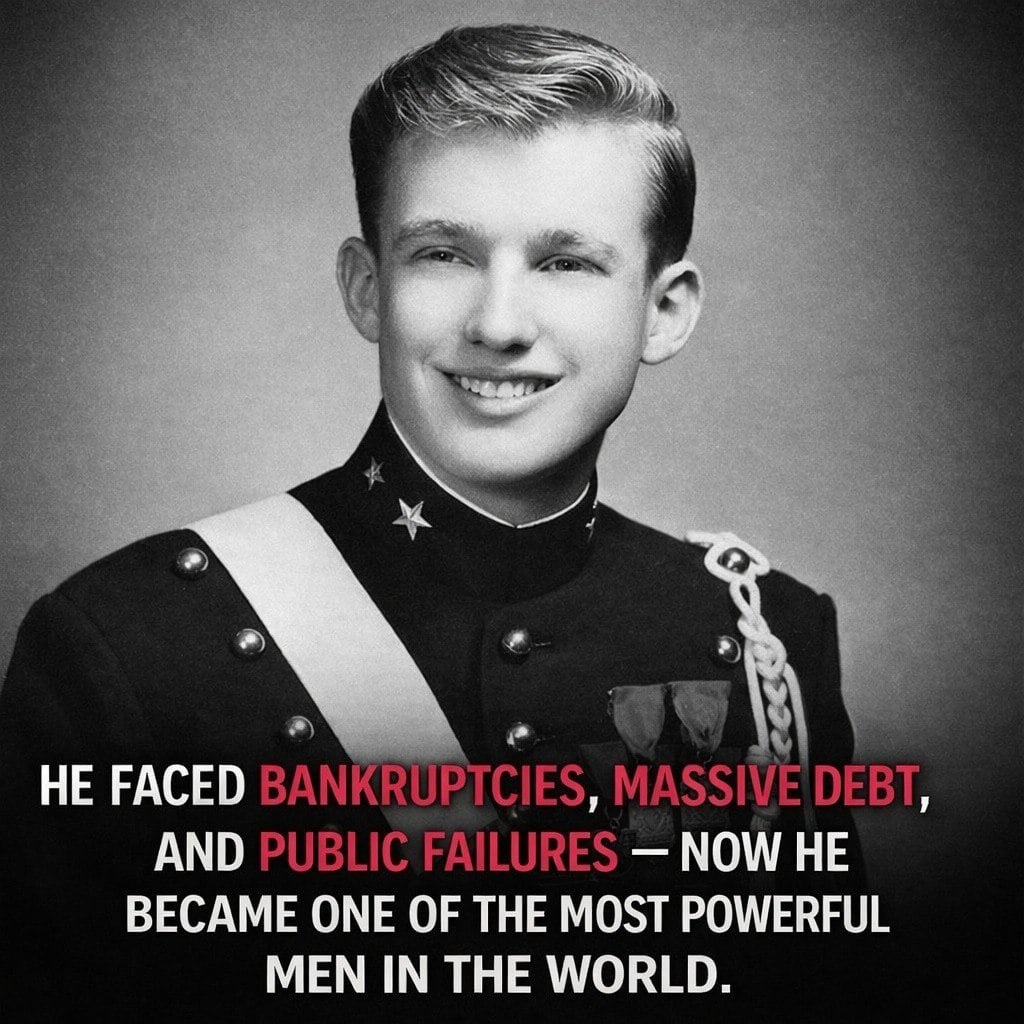
By the mid-1990s and early 2000s, that understanding would prove to be his most powerful asset.
Rather than fading from relevance, he pivoted into a different arena entirely—entertainment. The Trump brand, once tied primarily to real estate, began to exist as a media product. Casinos, licensing deals, luxury branding, and televised appearances kept his name in circulation even as his business empire underwent restructuring and recovery. Then came The Apprentice, a reality television show that reshaped his public image from controversial developer to decisive authority figure. The phrase “You’re fired” became a cultural catchphrase, and Trump himself became a weekly fixture in millions of homes, carefully controlling the narrative of competence, power, and success.
While critics dismissed it as performance, the show achieved something more durable: it reintroduced him to the American public not as a failed businessman, but as a symbol of command and deal-making certainty. Over time, media exposure blurred the lines between persona and perception, and his name became less a corporate label and more a political brand in its own right.
That transition eventually carried him into an arena few expected. In 2015, he launched a presidential campaign that was initially met with skepticism across much of the political establishment. Yet his blunt messaging, outsider positioning, and media fluency resonated with a large segment of voters who saw in him not a traditional politician, but a disruptor.
Against long odds, he won the presidency in 2016, completing one of the most improbable political ascents in modern American history. From real estate heir to high-profile developer, from bankruptcies to television celebrity, and ultimately to the Oval Office—his story became a case study in reinvention, resilience, and the unpredictable intersection of fame, finance, and politics.
Leave a Reply