
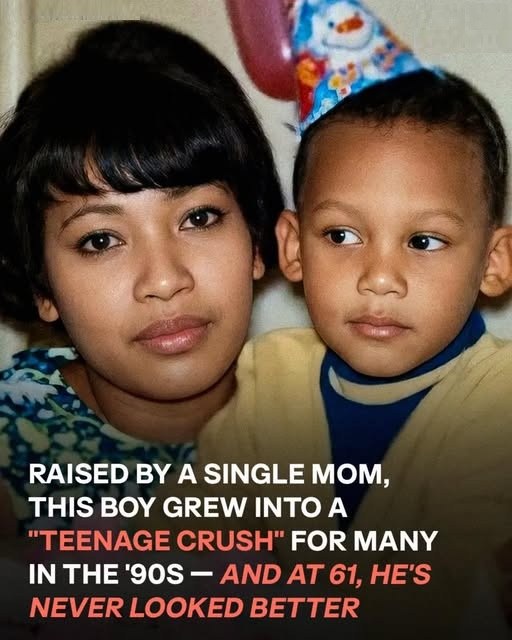
From the chaotic streets of New York’s East Village to the bright lights of Hollywood, Khalil Kain’s journey is a story of resilience, discipline, and survival.
Best known for his breakout role as Raheem in the 1992 cult classic Juice, Kain captured audiences with his calm intensity, intelligence, and natural screen presence. But behind the teen heartthrob image was a young man shaped by hardship, responsibility, and an unwavering drive to rise above his circumstances.
Raised in a single-parent household in the East Village, Kain’s early life was marked by instability. By the age of 16, his family had moved sixteen times due to financial struggles. As the eldest of three siblings, he took on adult responsibilities early, helping his mother while navigating a difficult environment. “I wanted to stay out of jail, I wanted to stay alive,” he later reflected, summing up the reality of his youth.
Amid the chaos, one steady influence emerged—his maternal grandfather, a Chinese martial artist. Under the guidance of Grand Master Ho Jin Song, Kain trained in Hapkido and earned a first-degree black belt. Martial arts became more than training; it became a foundation for focus, discipline, and self-mastery.
Acting was never part of his original plan. After appearing in commercials, he was encouraged to audition for larger roles—and he said yes, not knowing it would change his life.
In 1992, that decision led him to Juice, where he starred alongside a young Tupac Shakur. Kain’s portrayal of Raheem quickly resonated with audiences, turning him into a standout presence in one of the most influential films of the decade.
Following Juice, Kain built a steady career across film and television, appearing in projects such as Renaissance Man, Bones, For Colored Girls, and The Tiger Woods Story. On TV, he became a familiar face through roles in Girlfriends, CSI, Sister, Sister, and Blue Bloods, showcasing his range across drama and comedy.
Beyond acting, Kain remained deeply connected to martial arts, eventually teaching Hapkido and sharing its principles with students. He also taught acting and creative courses, emphasizing discipline, responsibility, and awareness in artistic expression.
His creativity extends into writing and spoken-word poetry, influenced in part by his father, Gaylen Kain, a member of the influential group The Last Poets. This artistic lineage helped shape his voice as a storyteller both on and off screen.
Despite his achievements, Kain consistently describes fatherhood as his greatest role. As a father of three, including actor Luka Kain, he prioritizes presence, guidance, and giving his children the stability he once lacked.
Today, Khalil Kain stands as more than a 1990s film icon. He is an actor, martial artist, teacher, writer, and father whose life reflects discipline, transformation, and enduring resilience.
Leave a Reply