
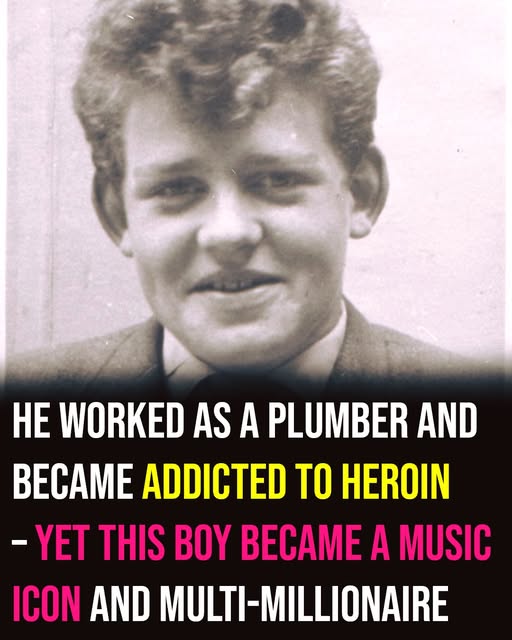
With his unmistakable gravelly voice and powerful stage presence, Joe Cocker became one of the most distinctive artists in rock and soul-influenced music. Over a career spanning several decades, he gained international fame through emotionally charged performances, passionate reinterpretations of well-known songs, and a raw vocal delivery that set him apart from most of his contemporaries. His path from a working-class upbringing in northern England to global recognition remains one of music’s most remarkable stories.
Born in Sheffield, England as John Robert Cocker, he grew up in a modest post-war environment shaped by factories, smoke, and industrial life. The city’s heavy atmosphere and working-class realities formed the backdrop of his early years, influencing both his outlook and artistic identity. Even in these difficult conditions, music became an important escape and early passion for him.
He left school at 16 and briefly trained as a gas fitter, but his interest in music quickly took over. He began performing in local pubs and small venues around Sheffield, gradually building experience despite limited equipment and modest audiences. These early performances helped him develop the emotional, expressive style that would later define his career.
In the early 1960s, he sang in local bands influenced by blues and rock, slowly gaining attention for his unique voice. In 1964, he recorded a cover for Decca Records, though it failed to achieve commercial success. Still, the opportunity marked an important step forward, and he continued refining his sound while performing locally.
His breakthrough came in 1968 with his reinterpretation of “With a Little Help from My Friends.” The song became a major hit in the UK and later internationally, transforming him from a regional performer into a global artist. His version stood out for its emotional intensity and dramatic delivery, reshaping the original into something entirely new.
This success led to his first major U.S. tour in 1969, where his live performances quickly gained a reputation for their energy and unpredictability. That same year, his appearance at Woodstock became a defining moment of his career, with his performance of the song becoming one of the festival’s most iconic highlights.
In the years that followed, his fame continued to grow, especially with the success of the live album Mad Dogs & Englishmen. However, the pressures of fame, constant touring, and a demanding lifestyle began to take a serious toll on his health and personal life.
During the 1970s, he struggled with alcohol and drug addiction, which affected both his career stability and personal well-being. Despite these challenges, he continued to perform and record, showing resilience even during difficult periods marked by inconsistency and recovery attempts.
By the mid-1970s, his career faced uncertainty due to health issues and the impact of his lifestyle. Still, he never fully stepped away from music, and his reputation as a powerful live performer endured.
A major positive turning point came when he met Pam Baker, whom he later married in 1987. Their relationship is widely credited with helping him find greater stability and overcome many of his earlier struggles.
In the 1980s, he experienced a strong career revival, highlighted by his duet “Up Where We Belong” with Jennifer Warnes. The song became a No. 1 hit in the U.S., won a Grammy Award, and gained further recognition through its use in An Officer and a Gentleman.
Over the following decades, he continued recording and touring, releasing albums such as Unchain My Heart and Night Calls. Though his output slowed with time, he remained active and respected for his unmistakable voice and emotional performance style.
Joe Cocker passed away on December 22, 2014, in Crawford, Colorado, at the age of 70 due to lung cancer. A former long-term smoker, he had quit in the 1990s, but the illness ultimately claimed his life.
By the time of his death, he had built a legacy of influential recordings, powerful live performances, and a distinctive approach to interpreting songs. His ability to transform familiar music into deeply emotional experiences remains one of his greatest artistic contributions.
Today, he is remembered as a singular voice in rock music—an artist whose raw emotion, authenticity, and resilience left a lasting mark on generations of listeners.
Leave a Reply