
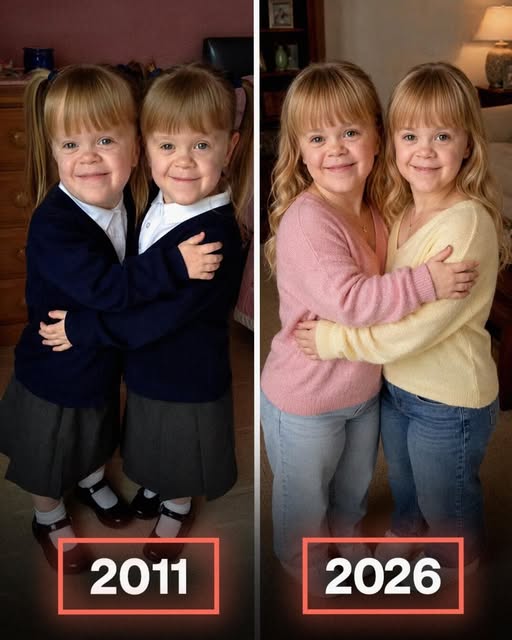
The last time I saw my mother, I was seven. It was a Tuesday morning, ordinary in rhythm, yet etched into my memory with startling clarity. I sat on the floor struggling with my sneaker laces while Mom braided my twin sister Lily’s hair at the kitchen table. She promised to be at the school gate when the final bell rang, stooped down, and kissed each of us on the forehead. She whispered that she loved us more than the entire sky.
But that afternoon, the school gate was empty. Instead, our father waited, his hands trembling, eyes wide with a fear I couldn’t understand. “Your mother… isn’t coming back,” he said. And just like that, fifteen years of silence began.
Three months later, Jean arrived. She came with gifts, a hot casserole, and a smile that, even as a child, seemed forced, almost dishonest. Within a month, she had become our stepmother. At first, she played the role well—packing lunches, narrating bedtime stories with dramatic voices—but her mask slipped as we grew older. By the time we were nine, those bedtime stories had turned into lectures filled with anger.
“She abandoned you,” Jean would sneer whenever we asked for anything beyond thrift-shop hand-me-downs or worn winter coats. “I’m the reason you’re not homeless.”
We learned that love was conditional, that obedience was currency. While our father worked double shifts to support Jean’s luxurious lifestyle, Lily and I lived on scraps, quietly shrinking ourselves to survive.
This Mother’s Day, things changed. With Lily working two shifts, I decided to surprise Jean with a bouquet of stargazer lilies—the flowers she loved—saved for with painstaking pennies. When I arrived, the door was unlocked. From the kitchen, I heard her laugh—bright, sweet, toxic—a voice she reserved only for when she thought no one was listening.
I froze. And then I heard it: my name.
“Oh God,” Jean laughed into the phone. “I still can’t believe those two fools never suspected a thing. And I even fooled their pathetic mother… she has no idea that—”
Her words sliced through me. My mother had not abandoned us. Jean had deceived her, feeding lies and fears until our mother had no choice but to flee a phantom threat. My heart hammered as the truth hit me: the woman we had been trying to please for fifteen years was the architect of our misery.
I didn’t rush her. Instead, I put on a mask of devotion, carrying the flowers to the kitchen. Pretending to go to the restroom, I slipped into the hall closet Jean had forbidden us to enter. Inside, three shoeboxes were hidden beneath layers of designer clothes. I opened them to find letters—dozens of them—addressed to Lily and me. Birthday greetings, love letters, the most recent postmarked only nine days ago.
Jean’s façade crumbled when she discovered me. For the first time in fifteen years, I didn’t feel fear as she raged, threatening our father’s love and control. Her power depended entirely on our ignorance.
The confrontation escalated when our father arrived. He saw the letters, the deception, the life he had unknowingly lived. Jean tried to reclaim her role as the victim, but he didn’t back down. Her game was over. And just like that, she disappeared.
We drove two towns away to the address on the latest letter. When the door opened, a woman who looked exactly like me, worn by grief but radiant with hope, answered. That afternoon, the room was filled with tears, disbelief, and the words that had been denied to us for so long.
I realized then that our early years were not defined by abandonment but by disruption. The mother who had fought for us from afar was finally reunited with her daughters. The sky felt vast again, but for the first time in fifteen years, it felt like home.
Leave a Reply