
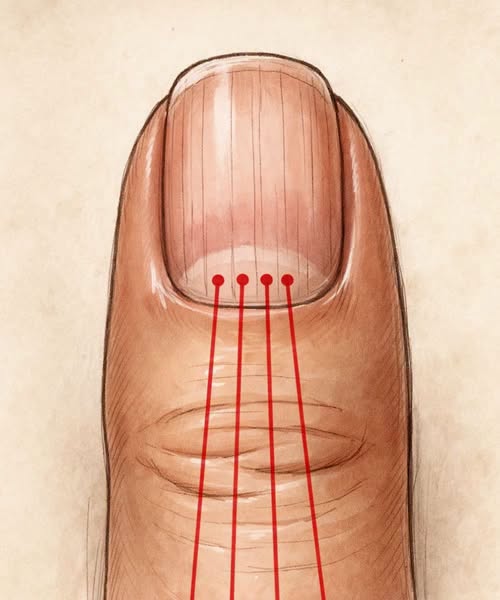
Nails are often viewed as a cosmetic detail—something we shape, paint, or keep neatly trimmed—but they can actually offer useful clues about what’s happening inside the body. Small changes in their appearance, texture, or growth pattern may sometimes reflect internal health shifts long before other symptoms become obvious.
One of the most commonly observed changes is the presence of vertical ridges. These fine lines running from the base of the nail to the tip are usually harmless and tend to become more noticeable with age. As nail growth naturally slows over time and the body produces less oil and moisture, these ridges can appear more defined.
However, not all nail changes are simply age-related. When nails become brittle, thin, or prone to splitting, it can sometimes suggest nutritional gaps or imbalances. Because nails grow gradually and continuously, they often reflect longer-term dietary habits.
Protein is one of the most important building blocks for nail strength. Nails are primarily made of keratin, a structural protein. When protein intake is insufficient, nails may become weak, soft, or more likely to peel and break. Including foods such as eggs, poultry, fish, yogurt, legumes, lentils, and tofu can help support healthy keratin production.
Certain vitamins also play a key role. Biotin (vitamin B7) is especially linked to nail strength and thickness. Low levels may contribute to brittle or easily breaking nails. Biotin is found in foods like eggs, nuts, seeds, leafy vegetables, sweet potatoes, and salmon, making it accessible through a balanced diet.
Iron is another essential nutrient. Low iron levels can sometimes be associated with thin, ridged, or unusually shaped nails. This may also come with symptoms such as tiredness or low energy. Iron-rich foods include lean meats, lentils, beans, chickpeas, pumpkin seeds, and dark leafy greens. Pairing plant-based iron sources with vitamin C-rich foods like citrus or peppers can improve absorption.
Zinc is also important for healthy nail growth and repair. A deficiency may lead to slow growth, fragility, or small white spots on the nails. Good sources of zinc include seafood, beef, nuts, seeds, and whole grains.
Healthy fats, particularly omega-3 fatty acids, support moisture balance in the nails and help prevent dryness and splitting. Fatty fish such as salmon and sardines, as well as plant sources like flaxseeds, chia seeds, and walnuts, can contribute to better nail hydration from within.
Overall hydration also matters. Drinking enough water supports not only nail health but also skin, hair, and overall body function. Water-rich foods like cucumber, oranges, and watermelon can further support fluid balance.
It’s important to keep expectations realistic—nails grow slowly, so improvements in strength or texture may take weeks or months of consistent dietary changes to become noticeable.
At the same time, nail changes are not always nutrition-related. Deep horizontal ridges, sudden discoloration, dark streaks, persistent pain, or major shape changes should be evaluated by a healthcare professional, as they can sometimes indicate underlying medical conditions that require attention.
Leave a Reply