
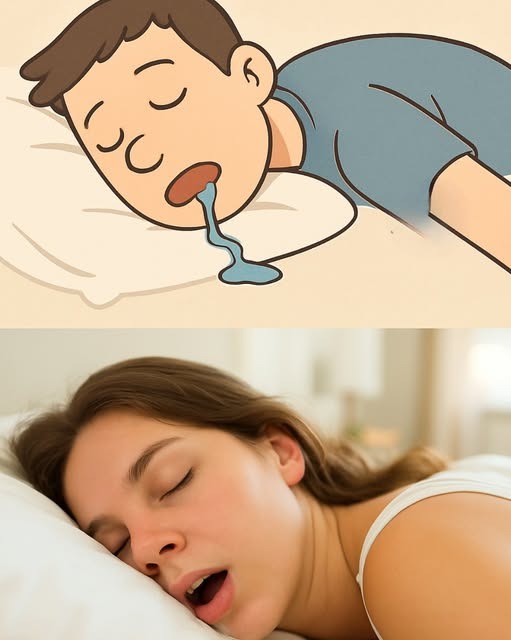
Drooling during sleep is usually a normal sign that your body is fully relaxed rather than something wrong. As you enter deeper stages of sleep, the muscles that control your jaw and swallowing naturally loosen. This can cause your mouth to open slightly, slowing the swallowing reflex while saliva continues to be produced. With fewer swallows clearing it away, saliva can collect and sometimes escape from the mouth.
Your sleeping position can also play a role. Lying on your side or stomach makes it easier for gravity to pull saliva outward. Breathing through the mouth due to nasal congestion from allergies, a cold, or sinus issues can increase this effect as well. In some cases, conditions like acid reflux may stimulate extra saliva production, adding to nighttime drooling.
Most of the time, this is harmless and simply part of normal sleep physiology. However, if drooling becomes sudden or excessive, or is accompanied by difficulty swallowing, changes in speech, or eating problems, it’s a good idea to seek medical advice to rule out underlying neurological or muscular conditions.
Leave a Reply