
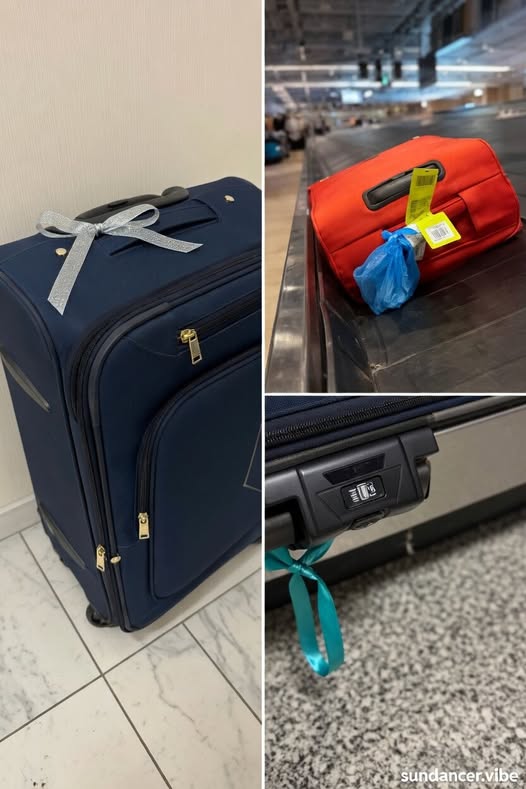
Air travelers often pick up small habits that seem smart and harmless—like tying a bright ribbon onto a suitcase handle to make it easier to recognize. It’s a simple idea: help your bag stand out among dozens that look nearly identical. But according to baggage handlers, this common trick can actually create more trouble than most people realize. What feels like a clever solution can interfere with airport systems, increase the risk of delays, and even lead to damage or lost luggage.
Behind the scenes, airport baggage systems are built for speed and precision. Thousands of bags move through automated networks every hour, guided by barcode tags that are scanned in seconds. These scans determine exactly where each suitcase goes. But the system depends on one key thing—a clear, unobstructed view of that barcode.
That’s where ribbons become a problem. Loose fabric, bows, and decorative ties can swing over the tag at the exact moment it’s being scanned. When that happens, the system can’t read the information, and the bag is immediately pulled off the main line. Instead of continuing smoothly, it’s diverted for manual handling—a process that is slower, less efficient, and far more prone to mistakes.
In busy airports, manually sorted bags can pile up quickly. Workers have to process them under time pressure, and delays are common. A suitcase that should have made it onto a flight might end up sitting behind, simply because it was removed from the automated flow. For travelers, this often turns into the frustrating experience of arriving without their luggage.
Ribbons can also cause physical problems. Modern baggage systems rely on fast-moving belts, rollers, and tight turns. Anything loose can get caught. When a ribbon snags, it can tear away—or worse, pull the bag into machinery. The result can be broken handles, ripped seams, cracked shells, or other damage. What looks like rough handling is often the result of items attached to the bag.
Another issue is reliability. Ribbons don’t always stay on. They can come loose during inspections or get pulled off during transit. Many travelers only realize this when they reach baggage claim and find their identifying marker missing. Without it, their suitcase blends in with many others, making it harder—not easier—to spot.
Ironically, ribbons have become so common that they no longer make bags stand out. On busy travel days, countless suitcases are decorated with similar ties, straps, and colors. Instead of helping, they create even more confusion, with multiple bags looking almost the same.
In the end, what seems like a helpful trick often backfires. Rather than improving visibility, ribbons can disrupt the system, increase risk, and make identification less reliable.
Leave a Reply