
The question of what happens after death has fascinated humanity for centuries, shaping religious beliefs, philosophical discussions, and scientific exploration.
Across cultures, interpretations vary widely. Some believe in an afterlife guided by faith, while others view death as the natural end of biological life. Between these perspectives lies a growing interest in near-death experiences—moments of awareness reported during life-threatening situations.
These experiences are often shared by individuals who were clinically close to death and later revived. While science continues to study them, many accounts remain difficult to fully explain, blending neurological, psychological, and spiritual elements.
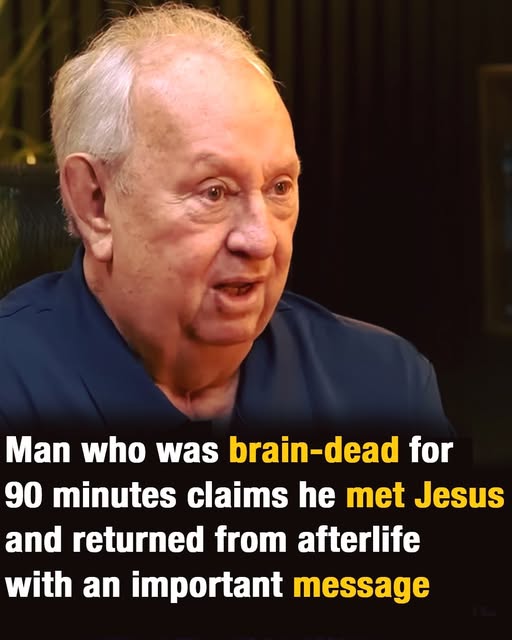
One such story comes from Robert Marshall, who says he underwent a profound experience following a serious medical emergency in 2024. His account has gained attention online and through interviews.
Robert spoke publicly about his experience on the Next Level Soul Podcast, where he described what he believes happened during a critical period when he was unconscious.
According to his account, the situation began when he sought medical attention for a severe condition involving a large, swollen mass on his neck that was affecting his breathing. Doctors conducted scans and tests, and while the issue was serious, it was not initially considered immediately life-threatening.
However, his condition reportedly worsened rapidly, leading to a medical crisis. He later claimed his body went into severe distress, requiring urgent intervention.
Robert described experiencing multiple “code blue” events—medical emergencies involving cardiac arrest or critical failure. During this time, he was placed in a coma-like state that lasted several days, with complications including respiratory failure and heart-related issues.
He specifically mentioned acute hypoxic respiratory failure, a dangerous condition where the body is deprived of oxygen, potentially leading to organ damage and altered consciousness.
From a medical perspective, such conditions can cause vivid hallucinations, memory distortions, or unusual sensory experiences due to the brain being under extreme stress.
However, Robert believes what he experienced went beyond that.
He claims that during this period, he entered another realm—describing it not as a near-death experience, but as actual death followed by a spiritual encounter. It’s important to note that in medical terms, death is defined differently, and such claims are considered personal interpretations rather than clinical conclusions.
In his account, he describes a visually striking environment filled with natural beauty—large oak trees, expansive landscapes, and intensely vivid colors. He also recalls an overwhelming sense of peace and love, far beyond anything he had experienced before.
These types of sensations are commonly reported in near-death experiences and are sometimes linked by researchers to changes in brain chemistry during extreme stress.
The most significant part of his story involves an encounter with a figure he identified as Jesus—an interpretation shaped by his personal beliefs. Encounters with religious figures are not uncommon in such experiences and often reflect an individual’s cultural or spiritual background.
Robert said he felt a deep emotional connection during this moment, especially toward his family. He described being aware of his wife’s distress and feeling it as if it were his own, which strengthened his desire to return.
He claims he asked to go back—and that this request was acknowledged.
According to his account, the figure he identified as Jesus communicated with him, explaining that his body had suffered severe damage but offering what he interpreted as a promise of restoration and healing.
From a scientific standpoint, such experiences are considered subjective and cannot be verified as evidence of an afterlife. They are typically studied as part of near-death phenomena.
Robert later regained consciousness, which he believes was directly connected to this experience. Medically, recovery after such events can occur due to treatment, resilience, and the body’s ability to stabilize.
He has since shared his story widely, including in a book where he explores how the experience changed his life.
Like many who report near-death experiences, he describes a lasting transformation—greater appreciation for life, deeper relationships, and a renewed sense of purpose.
Stories like his resonate because they touch on universal questions about existence and what may come after. At the same time, experts urge caution, emphasizing the importance of evidence-based explanations.
Research suggests the brain, under extreme conditions, can generate powerful and realistic experiences involving imagery, emotion, and perceived meaning.
Even so, many individuals remain convinced their experiences were spiritual in nature, highlighting the complex relationship between belief and perception.
Robert’s story adds to an ongoing conversation about consciousness and the limits of human understanding. While science does not support these experiences as proof of an afterlife, it continues to explore how and why they occur.
Ultimately, near-death experiences sit at the intersection of biology, psychology, and personal belief—making each account unique.
His story reflects that complexity, offering a perspective that is both deeply personal and widely debated.
Whether seen as a spiritual revelation or a neurological response, such accounts encourage reflection on one of humanity’s oldest questions.
What happens after death remains uncertain—but the search for answers continues through both science and human experience.
Leave a Reply