
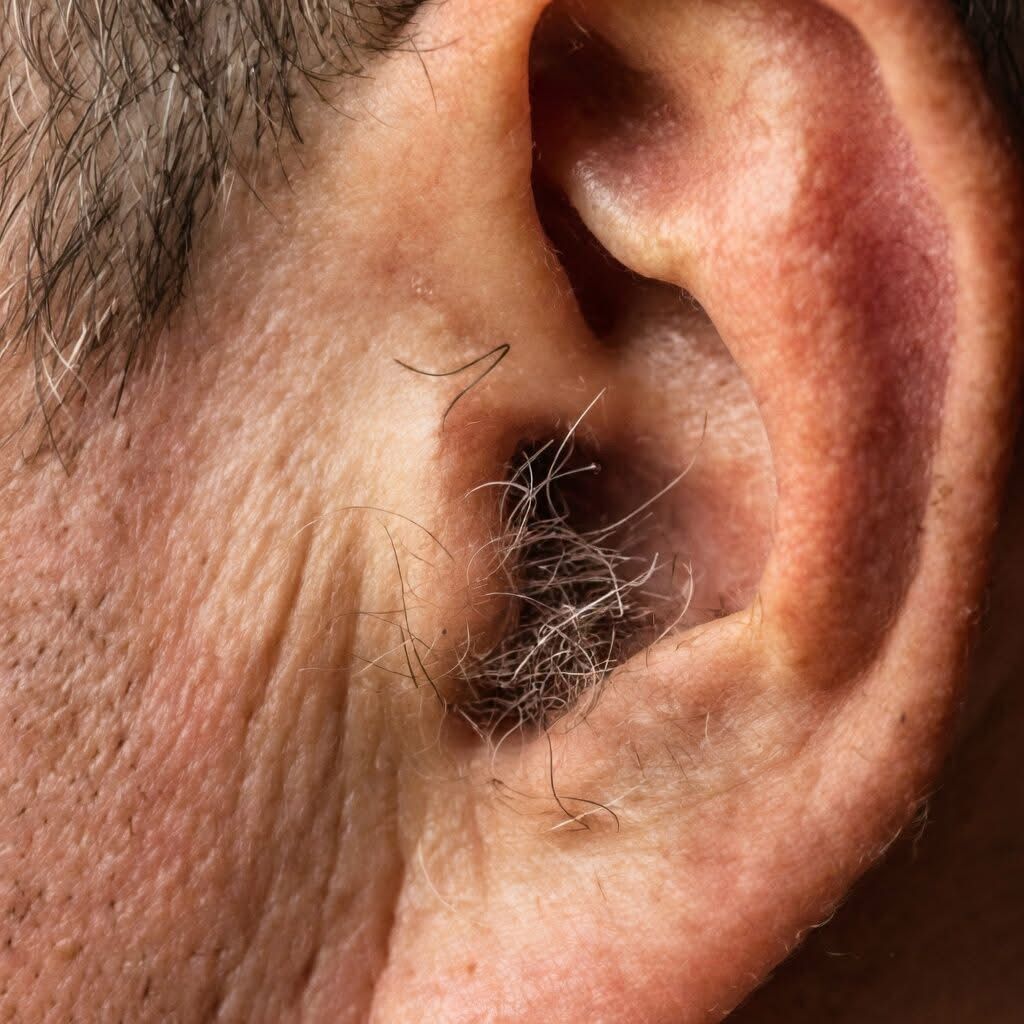
It’s a curious phenomenon—hair growing on your ears, and yet, it’s one of the most natural, albeit overlooked, signs of aging. For many people, it arrives quietly, often in their 50s or 60s, and with it comes a sense of confusion or even embarrassment. Suddenly, there’s a change in a part of the body that was once entirely smooth, and questions arise. Is this normal? Should I be worried? The answer is simpler and far less ominous than many believe.
Ear hair growth is just another phase of aging. It’s an entirely ordinary process influenced by hormones and genetics. It isn’t a disease or an abnormality. Understanding this can ease the fear and shame that often accompany it, and allow for a shift from self-consciousness to acceptance.
Aging is Not a Malfunction, But a Process
The body’s aging process isn’t uniform; it’s uneven, and hair changes are among the most visible markers. While scalp hair may thin over time, other areas like the ears, nose, and even eyebrows may experience more hair growth. This paradox—where some areas lose hair and others gain—often confuses people. But it follows a clear biological logic: the hair follicles across the body react differently to hormonal changes as we age.
In particular, androgens—such as testosterone and dihydrotestosterone (DHT)—play a key role in hair growth patterns. These hormones affect different parts of the body in distinct ways, and while scalp hair may thin due to hormonal changes, other hair growth, such as in the ears or nose, may become more pronounced.
The Role of Hormones in Ear Hair Growth
Our hormones shift over time. Testosterone, for instance, may decrease overall as we age, but certain tissues become more sensitive to its byproducts, such as DHT. This shift leads to:
- Scalp hair thinning
- Eyebrow thickening
- Thicker, longer nose and ear hair
This hormonal sensitivity explains why hair grows in new places or becomes more noticeable. For men, this is particularly common due to a lifetime of androgen exposure. Women, too, may experience it after menopause when estrogen levels decrease, making the effects of androgens more noticeable.
Genetics: The Blueprint for Hair Growth
Genetics also play a central role in determining where and how much hair will grow on the body. If your father, grandfather, or uncles had noticeable ear hair, the likelihood is that you will, too. Family history influences:
- Hair follicle density
- Sensitivity to hormones
- Hair thickness and color
Thus, ear hair growth isn’t random, nor is it something caused by diet, lifestyle, or hygiene. It’s simply a genetic trait passed down through generations, one that becomes more apparent as time goes on.
Ear Hair Once Had a Purpose
Looking at it from an evolutionary standpoint, ear hair did, in fact, serve a practical function. It helped trap dust and debris, reduce the entry of insects, and protect the ear canal. In youth, these hairs are fine and barely visible. However, as the growth cycle lengthens with age, they become more noticeable. What was once subtle becomes more pronounced—but that doesn’t mean the body is “failing.” It’s simply continuing its job of protection.
Debunking Myths
Over the years, several myths have emerged about ear hair growth. Let’s set the record straight:
- Myth: Ear hair means poor circulation.
False. There is no medical evidence linking ear hair to circulation issues. - Myth: Ear hair indicates liver or kidney disease.
False. Hair growth patterns are not markers of organ dysfunction. - Myth: Ear hair signals hormone imbalance.
False. It is a normal, aging process that reflects hormonal changes, not a pathology. - Myth: Removing ear hair makes it grow back thicker.
False. This is a visual illusion caused by blunt hair ends. Trimming does not stimulate more growth.
Understanding these myths helps alleviate the fear and confusion often associated with ear hair.
The Psychological Impact and Embarrassment
For many, ear hair triggers feelings of embarrassment. Society often associates aging with the loss of attractiveness or vitality, making natural changes like ear hair feel like something to hide. But ear hair isn’t a flaw—it’s a testament to a life lived, to the body adapting over time.
There’s no shame in aging. It’s a process we all go through, and learning to embrace it with understanding rather than shame is vital for mental well-being.
Grooming is a Personal Choice
Some people may prefer to trim their ear hair for aesthetic reasons, and that’s perfectly fine. Others may choose to leave it alone, and that’s just as valid. When it comes to grooming, it’s about personal preference, not necessity.
If you do choose to groom, safe options include:
- Small electric trimmers designed specifically for ear hair
- Rounded-tip scissors for careful trimming
What should be avoided:
- Waxing inside the ear canal
- Plucking deep ear hairs (which can cause irritation or infection)
- Using sharp tools without good visibility
It’s important to remember that grooming should never be driven by fear, but rather by individual comfort.
When Ear Hair is NOT Normal
While gradual ear hair growth over time is normal, if hair growth becomes sudden, extreme, or accompanied by other unusual symptoms, it may indicate an underlying issue. In such cases, consulting a healthcare provider is recommended, though this is a rare occurrence.
Aging is Cumulative, Not Corrective
The body doesn’t aim to stay eternally youthful; it aims to remain functional. Changes in hair growth patterns—whether wrinkles, graying hair, or ear hair—are part of this natural process. Aging is not a failure, but a sign that life has been lived.
A Cultural Reflection on Aging
In many cultures, visible signs of age were once seen as symbols of wisdom, experience, and respect. Unfortunately, modern society often forgets this, focusing instead on trying to halt the aging process. Instead of asking, “How do I stop aging?” a healthier approach is to ask, “How do I age well?”
Aging well involves understanding that changes like ear hair are normal, not something to hide.
The Final Reflection
Did you know? If hair grows on your ears, it’s simply your body aging naturally—responding to hormones and genetics that change over time, not because something is wrong.
The body tells stories, and ear hair is one of those stories. It reflects years of life, adaptation, and survival. There is no failure in it, no disease, no need for alarm—just time. Time well-lived is never something to be ashamed of.
Leave a Reply