
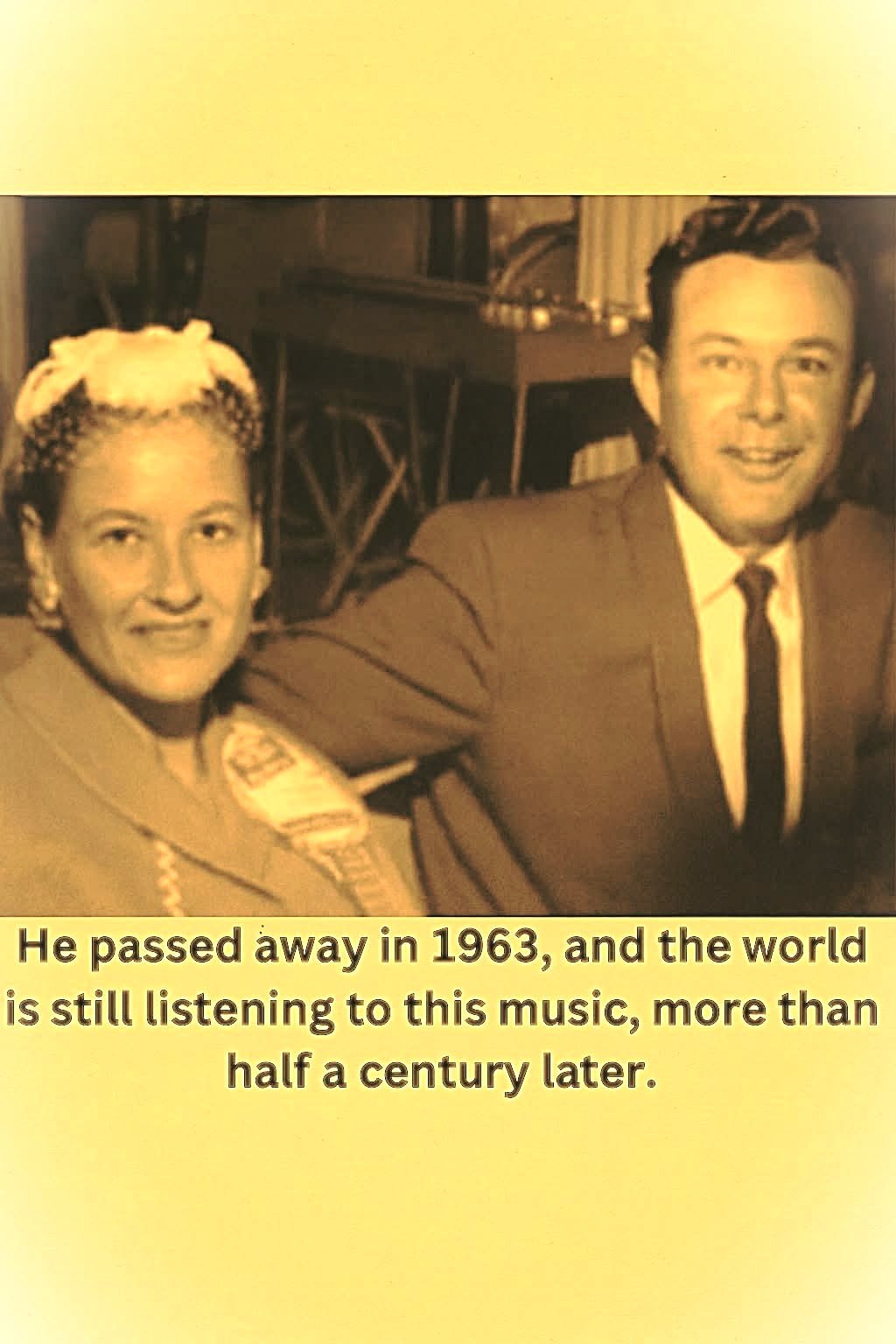
In 1960, a quiet but extraordinary recording emerged—one that would help redefine the sound of country music and expand its reach far beyond its traditional roots.
The song was He’ll Have to Go, performed by Jim Reeves. It quickly became a cornerstone of what would be known as the “Nashville Sound,” a style that blended classic country storytelling with smoother, pop-oriented production.
At the time, the music industry was shifting rapidly. Rock and roll was dominating airwaves, and country artists were under pressure to evolve. Against that backdrop, this recording stood apart. Its polished arrangement, soft delivery, and intimate tone offered something different from the raw, honky-tonk sound that had defined the genre.
The song itself was written by Joe Allison and Audrey Allison, inspired by a simple but powerful real-life moment. Joe reportedly overheard a man speaking softly into a telephone in a bar, trying to reach someone emotionally distant. That fleeting interaction became the emotional blueprint for a song about longing, separation, and the fragile hope of reconnection.
When the track reached producer Chet Atkins, he recognized an opportunity to reshape how country music could sound. Rather than leaning on traditional instrumentation, Atkins crafted a restrained, elegant arrangement—subtle guitar, gentle backing vocals, and a clear focus on the voice.
At the center of it all was Reeves’ performance. Known as “Gentleman Jim,” he brought a calm, velvety baritone that conveyed emotion without excess. Instead of dramatic flourishes, he relied on nuance and control, allowing the silence between lines to carry as much weight as the words themselves.
The result was a crossover success. The song resonated not only with country audiences but also with mainstream pop listeners, helping prove that country music could achieve global appeal without losing its emotional depth. It also played a key role in establishing Nashville as a hub for sophisticated, commercially viable music production.
Tragically, Reeves’ life was cut short in a plane crash in 1964, but his influence only grew in the years that followed. “He’ll Have to Go” endured as his signature recording, covered by numerous artists and featured across film, television, and radio.
More than six decades later, the song is still regarded as a landmark. Its legacy lies not just in its melody or lyrics, but in what it represents—a turning point where production, storytelling, and vocal restraint came together to reshape an entire genre.
It remains a powerful reminder that sometimes the most lasting impact comes not from volume or spectacle, but from simplicity, precision, and emotional truth.
Leave a Reply