
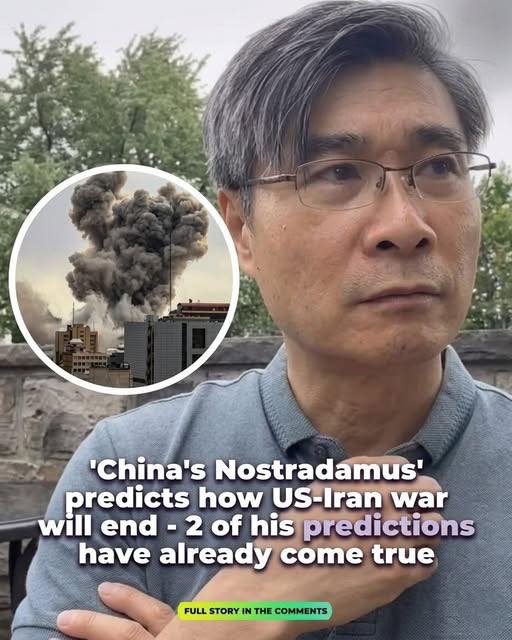
A man being dubbed the “Chinese Nostradamus” is drawing widespread attention online after sharing bold predictions about a potential conflict between the United States and Iran. Interest in his views has grown quickly, especially as some of his earlier forecasts appear to be aligning with real-world developments.
His name is Xueqin Jiang. Unlike a traditional fortune teller, he is known as a professor and researcher who studies political trends, historical cycles, and global patterns. Rather than relying on intuition, his analysis is rooted in observation and comparison, which is why many people are taking his claims seriously.
During a lecture in 2024, Jiang outlined three major predictions. He suggested that Donald Trump could return to power, and he warned that tensions between the United States and Iran would intensify. As current events seem to reflect parts of those projections, attention has now shifted to his third and most debated claim.
Jiang argues that if a conflict were to break out, the outcome may not be as straightforward as many assume. He emphasizes that even the most powerful nations can face significant challenges in prolonged wars, especially when fighting in unfamiliar or complex regions.
According to his analysis, Iran has spent years preparing for potential conflict—developing regional strategies, strengthening its defenses, and leveraging its geographic advantages. In his view, these factors could make any confrontation more drawn out and difficult than expected.
His perspective has sparked strong reactions. Some observers believe his reasoning is grounded and worth considering, while others argue that predicting the outcome of a war is inherently uncertain and often unreliable.
Regardless of where people stand, his analysis has fueled discussion. At its core, his message highlights the importance of understanding history, strategy, and long-term patterns—suggesting that global events often follow trajectories shaped long before they unfold.
Leave a Reply