
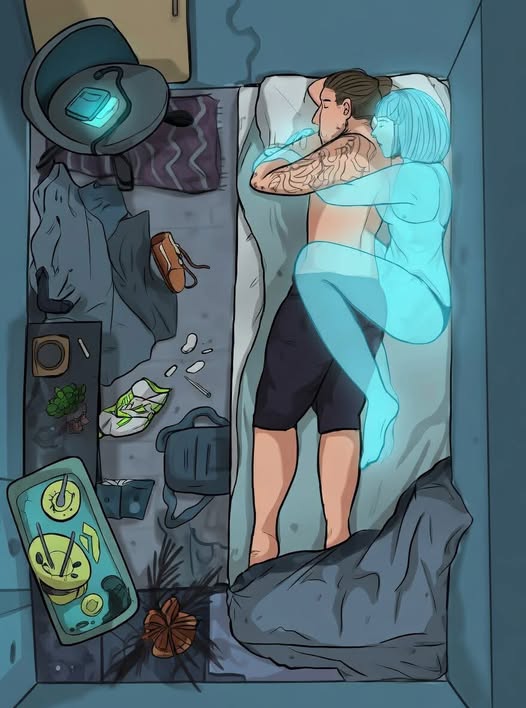
For many people, waking up between 3:00 and 5:00 a.m. feels like an unsolved puzzle, an experience that leaves you confused and frustrated. You might go to bed at a reasonable hour, ready for a full night of rest, but find yourself suddenly wide awake in the dark, heart racing, thoughts running wild, the world eerily still. You glance at the clock—it reads 3:27 a.m. You roll over, fluff your pillow, close your eyes, hoping to fall back asleep. But you don’t. Instead, you lie there, alert, restless, wondering what’s going wrong. And by morning, that fog of fatigue has settled over you, leaving you to push through the day, running on empty, with more questions than answers.
At first, it’s tempting to blame the usual culprits: caffeine too late, a stressful week, or maybe that late-night scroll through your phone. And while these factors certainly play a role, researchers and psychologists suggest there’s something deeper happening when the body repeatedly stirs in the hours before dawn. That particular window—between 3:00 and 5:00 a.m.—is no coincidence. It’s a potent mix of physiology, emotions, and subconscious activity, one that taps into both ancient wisdom and modern science.
The Hour of the Wolf
Long before the rise of sleep studies or wearable tech, people noticed something strange about the hours just before dawn. In folklore, this time was referred to as “the hour of the wolf.” Originating from Scandinavian myth and later popularized by Swedish filmmaker Ingmar Bergman, this period was said to be the time when most people died, most babies were born, and nightmares seemed the most vivid. It was believed to be a time when the veil between life and death was thinnest, and when fears and anxieties grew louder, demanding attention.
Bergman described it as “the hour when most people die, when sleep is deepest, when nightmares are most real… when the sleepless are haunted by their deepest fears.” Even today, the phrase resonates because it captures the peculiar emotional heaviness of being awake in that deep, silent stillness. The mind doesn’t wander toward productivity or logic but towards doubt, regret, or old memories—often those that were buried in the daylight. For some, it’s the hour of reflection; for others, it’s the hour of reckoning.
Yet, beyond the myths and melancholy, there’s a scientific rhythm that explains why this specific time carries so much power.
The Body’s Quietest Hour
From a physiological standpoint, waking up between 3:00 and 5:00 a.m. aligns with a natural low point in the body’s circadian rhythm—the internal clock that controls sleep, hormones, metabolism, and temperature. During this time, several key systems reach their minimums:
- Core body temperature drops to its lowest point, making the body more sensitive to discomfort or cold.
- Blood pressure falls, slowing circulation and oxygen flow.
- Cortisol, the body’s primary stress hormone, is at its lowest point before gradually rising to help wake you up.
- Liver and lung activity, according to Traditional Chinese Medicine (TCM), enter stages of detoxification and repair.
In this deep physiological lull, the body is at its most relaxed, but paradoxically, the mind becomes hyper-aware. A slight disruption—a small noise, a drop in blood sugar, or even a racing thought—can pull you from sleep, and the body struggles to recover because its energy reserves are at their lowest. This is why you may wake up feeling alert but unable to fall back asleep. Your body’s systems are too sensitive in these early hours.
Modern sleep research labels this phenomenon early morning awakening, often linked with stress, anxiety, or depression. When the mind is overwhelmed or burdened, cortisol patterns can shift, causing an early rise in stress hormones and pulling you out of your sleep cycle prematurely. Your body starts to “wake up” before it’s supposed to, as it senses discomfort or unease—whether emotional or physical.
When the Mind Wakes Before the Body
Psychologically, this window of wakefulness often mirrors emotional processing. During the deeper stages of sleep, especially between 1:00 and 4:00 a.m., the brain is busy consolidating memories, balancing hormones, and sorting through the events of the day. But if the mind is carrying unresolved stress, grief, or anxiety, this process can get disrupted. Instead of smoothly transitioning between sleep stages, the mind jolts awake—usually when emotional regulation cycles are most active.
This is why many people report racing thoughts or heightened emotions in those early hours. You might find yourself replaying conversations, worrying about the future, or confronting deep feelings that were buried during the day. It’s not that these emotions suddenly appear at 3:00 a.m.; they’ve been there all along, waiting for the stillness of the night to rise to the surface. Without the usual distractions of daily life, your subconscious finally has the space to be heard.
Therapists often call this phenomenon the “emotional audit” of the night. The mind checks in, revisiting unresolved conflicts, stressors, and fears. However, instead of offering peace, this emotional processing can trigger wakefulness. The body interprets emotional distress as physical alertness—an instinct designed to keep us alert to potential dangers. Today, those dangers are usually psychological, not physical, but the body still reacts as if they were life-threatening.
The Meaning of 3:00 A.M. in Ancient Medicine
In Traditional Chinese Medicine (TCM), the body’s energy (or qi) follows a 24-hour cycle, with each organ reaching peak function during two-hour intervals. The window between 3:00 and 5:00 a.m. corresponds to the lungs, which are associated with the emotion of grief and the process of letting go. Waking during these hours may indicate emotional blockages or the need to release sadness, guilt, or attachment.
In Western medicine, the symbolism still holds true. Many people experiencing loss, major life changes, or burnout report disrupted sleep patterns during these hours. Grief, in all its forms, has a way of finding its voice when the world is still and quiet.
Interestingly, the following two hours (5:00–7:00 a.m.) are associated with the large intestine in TCM—a metaphor for release and renewal. Waking just before dawn may symbolize a moment of transition, a call to breathe deeper, let go of emotional clutter, and prepare for a new day.
Stress, Hormones, and the Hidden Triggers
From a biological standpoint, stress is often the primary cause of early-morning awakenings. When the brain senses ongoing stress—whether related to work, relationships, finances, or self-imposed pressure—it disrupts the hormonal balance that governs sleep. Cortisol rises prematurely, while melatonin (the sleep hormone) tapers off too soon. This misalignment leaves you caught in a wakeful, restless state—too alert to sleep, too tired to function.
However, stress isn’t the only factor. Other triggers that can contribute to waking between 3:00 and 5:00 a.m. include:
- Alcohol: Although it can make you fall asleep faster, alcohol disrupts deep sleep and often leads to early morning wakefulness.
- Blood sugar dips: Eating a carb-heavy dinner or skipping a late-night snack can cause a drop in blood glucose, prompting your body to release adrenaline for stability.
- Caffeine sensitivity: Even an afternoon coffee can linger in your system and interfere with your sleep cycle.
- Sleep apnea: Interrupted breathing during sleep often peaks during these early hours.
- Menopause and hormonal changes: Fluctuations in estrogen and progesterone can significantly impact sleep.
Understanding these triggers and tracking your sleep patterns can help you pinpoint what might be contributing to your restless nights.
What to Do When It Happens
If you find yourself awake between 3:00 and 4:00 a.m., experts suggest the worst thing you can do is panic. Checking the clock, groaning, or blaming yourself for being awake only increases stress. Instead, try to reframe the moment:
- Don’t grab your phone: The blue light resets your internal clock and signals to your brain that it’s time to wake up.
- Practice slow breathing: Inhale for 4 seconds, hold for 7, and exhale for 8. This pattern activates your parasympathetic nervous system, calming your body.
- Acknowledge your thoughts without fighting them: If worries surface, gently tell yourself, “I’ll think about this in the morning.” This mental cue helps calm your mind.
- Try a body scan meditation: Starting from your toes, consciously relax each part of your body to shift your focus away from racing thoughts.
- If you’ve been awake for more than 20 minutes, get up: Sit in a dimly lit room and read something calming. Return to bed when drowsy.
The Spiritual Dimension
Many spiritual traditions view waking between 3:00 and 5:00 a.m. as a sacred time—both literally and metaphorically. Monks, yogis, and mystics have long described this window as when the mind is clearest and intuition sharpest. For some, it’s considered the “time of prayer,” when consciousness aligns most easily with reflection and divine energy.
Even if you don’t follow a particular spiritual tradition, this idea can offer comfort: perhaps you’re not broken or restless. Instead, your body may simply be inviting you to pause, breathe, and listen. Rather than seeing sleeplessness as a malfunction, see it as a message.
The Bottom Line
Waking up between 3:00 and 5:00 a.m. is more than just an inconvenient sleep disruption. It’s an intersection of biology, emotion, and spirit—an invitation to reflect on your inner world. Whether the cause is stress, an unprocessed emotion, or simply the body’s natural rhythm, that still, quiet hour before dawn offers an opportunity to pause, breathe, and listen to what your body, mind, and heart are trying to tell you.
Instead of fighting it, consider learning from it. Keep your evenings calm and address your stress during the day. And if you wake again tonight, remember: you’re not alone. Millions of others find themselves in those same dark hours, navigating their thoughts and seeking peace.
Because sometimes, the night wakes us—not to punish, but to remind us that healing, like dawn, often begins in the dark.
Leave a Reply