
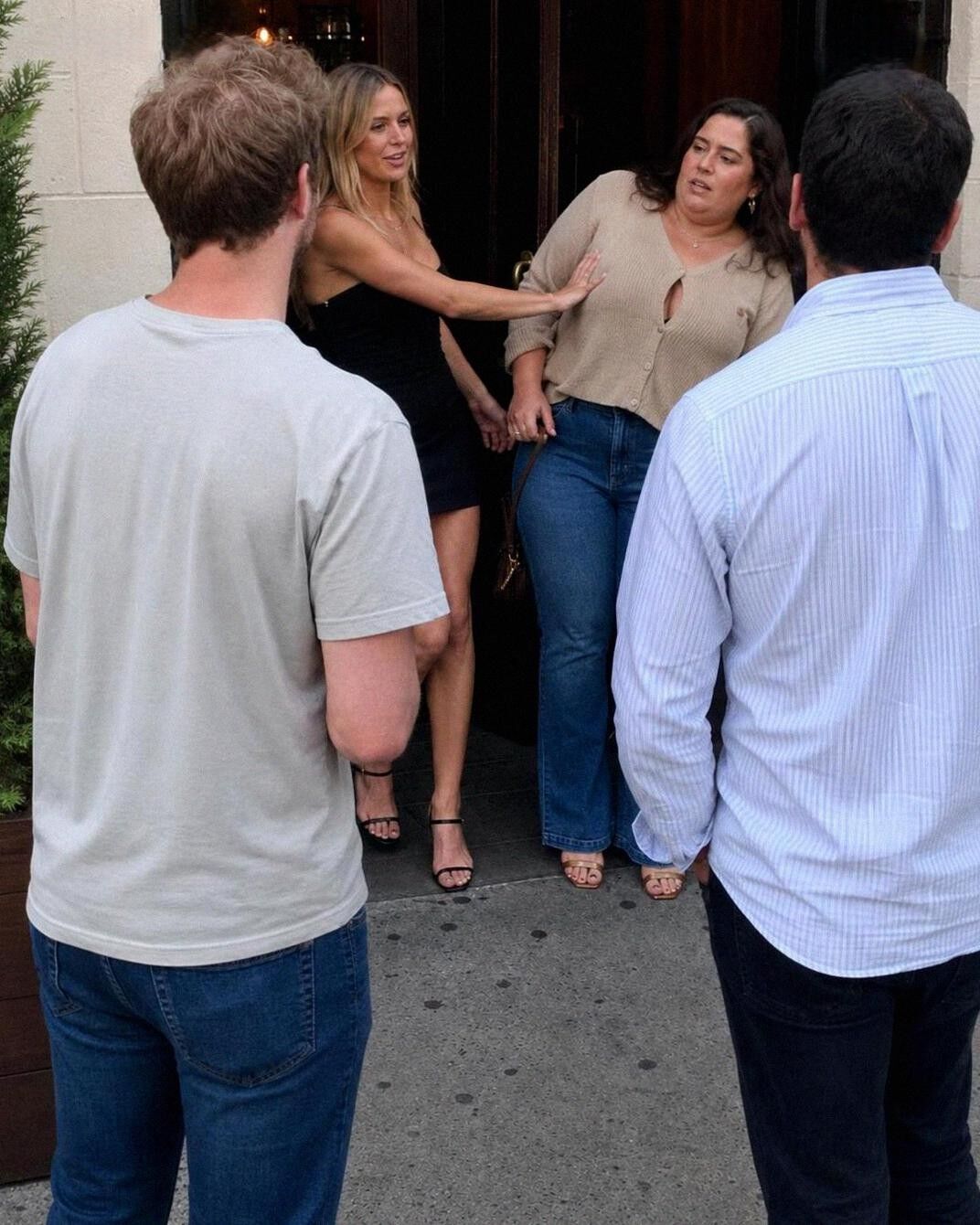
My sister Marissa had always been a master of backhanded praise. She had this horrifying ability to make brutality sound endearing, delivering insults in a charming accent that made people laugh before they realized they were witnessing a character assassination. She found me even more fascinating because I was thirty, unmarried, and content to stay under the radar. She relished casting herself as the kind saint, managing a sanctuary for my supposedly pitiful life.
A week before the double date, I overheard her on the phone, joking about how she’d bring me to dinner to play the rescuer while I sat in my depressing cardigans, quietly begging permission to exist. She didn’t know I was listening—and, more importantly, that I was already planning my move.
I volunteered three nights a week at a downtown literacy center, where no one mocked me. In that modest, cramped space, I was a leader, not the awkward, invisible sister. I taught adults the skills they had missed, helped secure extra funding, and spearheaded program improvements. When Marissa invited me to dinner with two men—one of whom I knew was a gatekeeper for literacy grants—I saw an opportunity to achieve two goals at once. I wasn’t there for love, and I certainly wasn’t there to bolster her ego. I spent days crafting a professional presentation with student testimonials, detailed budgets, and a clear expansion plan.
When Marissa picked me up on Friday, she insisted I wear an old beige cardigan with a hole at the chest and a missing button. “Comfort is your brand,” she said. I wore it to let her feel in control, to let her believe the story she had scripted would unfold.
At the restaurant, she performed her usual routine: introducing me as her socially awkward sister, making humiliating remarks about my life choices, and expecting me to shrink in embarrassment as she described my coupon obsession and crying over spilled coffee. When she reached over to brush off imaginary crumbs, the trap snapped shut.
I pulled a professional folder from my backpack and slid it toward Daniel, the man she had no idea I knew. I met Marissa’s eyes, making it clear that I, not she, had chosen this moment. As Daniel examined the documents—student letters, financial estimates, and the expansion plan—the table fell silent. Marissa attempted to spin it as a “cute moment,” but I interrupted, asking the men if they had ever questioned whether her stories about me were true. The weight of that silence was unmistakable. Daniel, a man of substance, looked at me with respect; Tyler, the other man, seemed embarrassed.
I didn’t stop there. I invited them to the literacy center the next morning to see my work firsthand, without Marissa’s distortions. To my surprise, they came—and Marissa couldn’t resist following. Inside that modest center, I simply did my work: helping Raymond read a long-overdue letter from his grandchild, organizing a woman’s grocery lists, and guiding others in the programs I ran. The applause, gratitude, and engagement of the students spoke louder than Marissa ever could. Her social mask faltered as she realized the sister she had so meticulously belittled was not pitiful at all.
Tyler asked her whether she truly believed the stories she told, highlighting her pattern of portraying me as weak. There was no recovery for Marissa’s narrative. Daniel took my proposal seriously, not out of sympathy, but because it was genuinely worthwhile. I reworked every section of the proposal over the next two weeks, presented it flawlessly to the board, and secured the grant.
I wore that same beige cardigan at the celebratory party, but I had made it my own: sleeves rolled, a new button stitched on, a tiny flower embroidered over the hole. Marissa stood next to me, bewildered, asking why I had kept it. I smiled, taking in the colorful, chaotic, and beautiful world I had built. I told her I had transformed it, not just preserved it. That day, her role as narrator of my life ended. I had walked into that restaurant as a joke—but I left as a woman who understood herself and refused to let anyone else define her.
Leave a Reply