
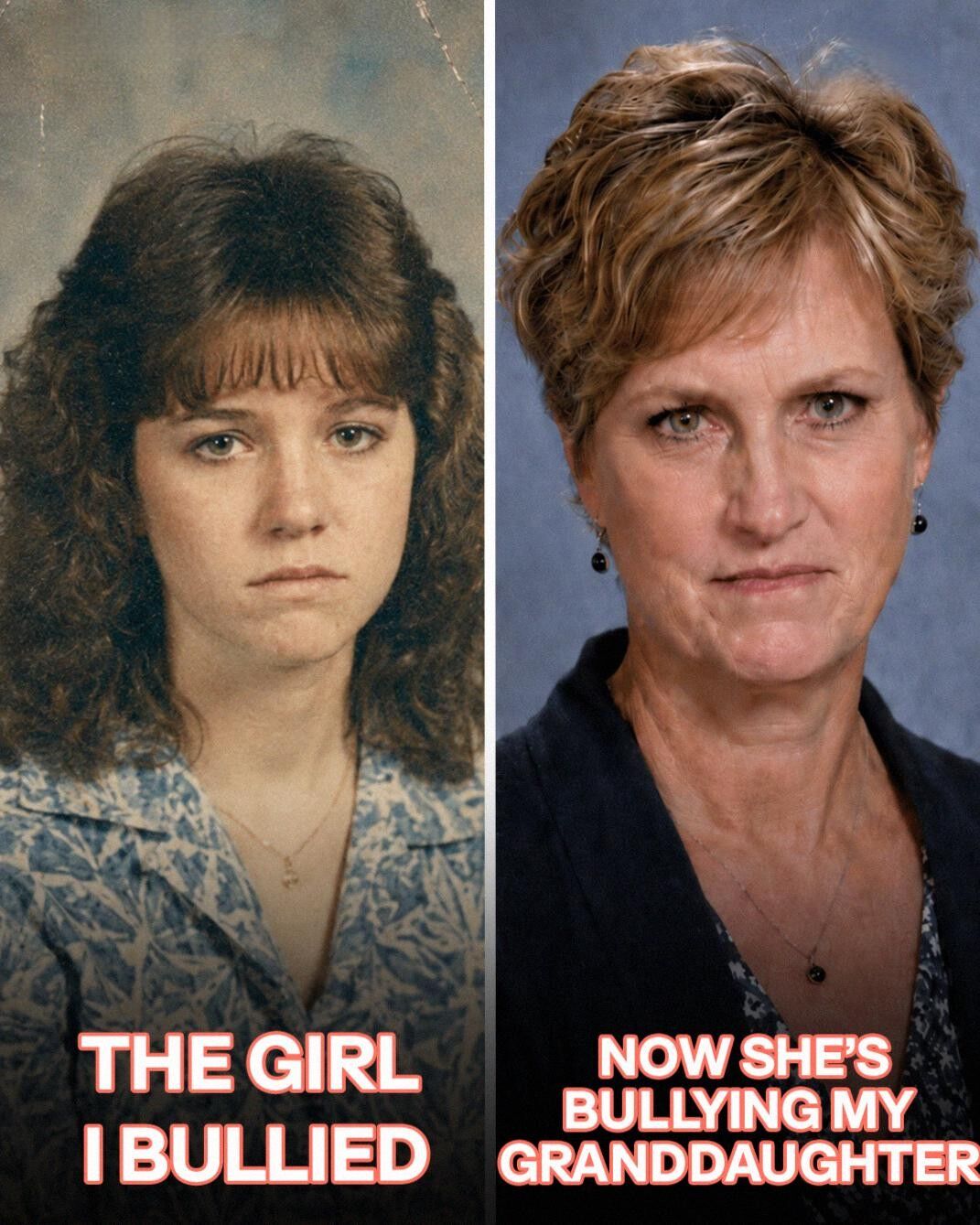
At fifty-nine, my name is Margaret, and I’ve lived a life that appears flawless. I take pride in raising my granddaughter, Sophie, with love and patience, and I am a respected member of my community. Yet, for more than forty years, a shadow has followed me—a past marked by the quiet, careless cruelty I inflicted on others as a teenager. I wasn’t loud or violent; I was subtle. I perfected the art of the whispered joke, the well-timed laugh, the nickname that undermined someone before they even reached their locker. And Carol was the girl I hurt the most.
For years, I convinced myself it was just youthful stupidity, that we were all children. But remorse doesn’t vanish with age—it waits.
Then three years ago, my daughter Rachel and her husband Daniel died in a car accident, leaving me with Sophie. Sweet, timid, still clutching her mother’s sweater at night, she became my world. I promised myself I would raise her differently, to instill the kindness and compassion I had so clearly lacked at her age.
When Sophie started fifth grade, she loved her new teacher, Mrs. Harris. She would talk excitedly about the books they read and the classroom plants. But over time, her smile faded. Grades dropped over seemingly arbitrary reasons—sloppy handwriting, lack of effort on projects she had worked on tirelessly. She came home dejected, convinced her teacher didn’t like her.
Then came Friday. Sophie burst through the door, crying so hard she could barely speak. In her backpack was a folded note, thrust into my hands: “Bad behavior runs in families.” My hands went cold. This wasn’t constructive criticism—it was personal.
I looked up Mrs. Harris on the school website. Carol. The tight, familiar smile remained despite short hair and subtle lines around her eyes. My granddaughter was paying for my mistakes from forty years ago. The past had returned.
I spent a sleepless night reliving every cruel act: the cafeteria humiliation, the whispered jokes, the isolation I forced upon her. And now, Carol controlled the world of the one person I loved most. I decided then—I would not let Sophie suffer for my sins.
The next morning, I requested a meeting with Carol and the principal. Carol’s face registered the same tight tension, the old wound reopening as I entered. The meeting broke the professional façade. She recounted the gossip, the exclusion from birthday parties, the mornings she sat in her mother’s car, too afraid to enter school. I felt sick hearing it, knowing I caused it. She admitted she had noticed me when Sophie arrived in her class and recognized the connection. My juvenile cruelty had followed her into adulthood.
Carol received a warning, though she didn’t think it was necessary. What mattered was the reckoning—the acknowledgment of the harm I had done.
In the weeks that followed, Sophie’s therapy improved, but I knew a private apology wasn’t enough. Determined to break the cycle, I asked the principal if I could speak at the school assembly. On Friday morning, my hands shook as I gripped the podium. I told the students and staff the truth: about the girl I had been, about how I used exclusion and laughter to feel powerful at the expense of others. I turned to Carol and apologized publicly.
The gymnasium was silent. Then Sophie walked across the floor and hugged Carol, whispering, “It’s alright.” My granddaughter’s simple act of kindness did what decades of trying to be respectable had not—it began to lift the weight of the past. Carol fell to her knees, crying.
After the assembly, Carol and I stayed behind in the empty gym. We didn’t achieve perfection, but we started the slow, difficult work of healing. I realized that facing the person I once was was the only way to stop the cycle of harm. That day, I learned that while we cannot undo the pain we’ve caused, we can prevent it from spreading to the next generation. We left the gym not as adversaries, but as two people finally laying down the burdens we had carried for far too long.
Leave a Reply