
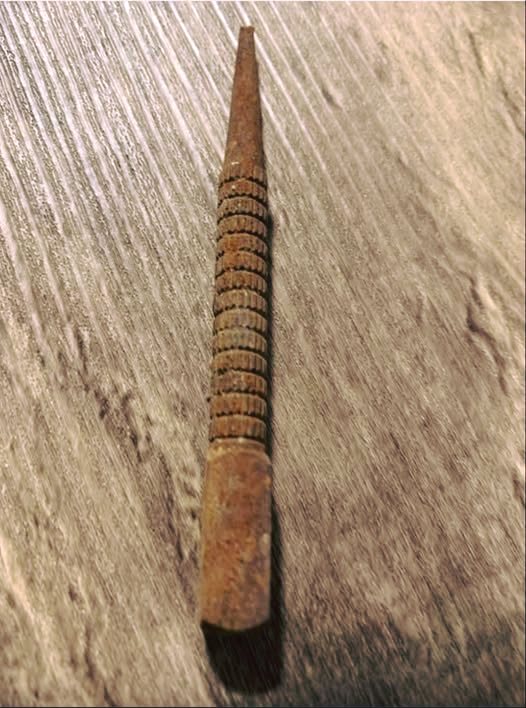
Sometimes you come across a tool in a workshop or toolbox that looks almost too simple to matter. It doesn’t have the presence of a drill or the cutting edge of a saw, yet it plays a crucial role in achieving a clean, professional finish. Many people even stop and ask what it’s for when they first notice it among more complex equipment. That tool is called a nail punch, also known as a nail set, and it has a long history rooted in precision craftsmanship.
At its core, the nail punch is a straightforward handheld tool used to drive nail heads slightly below the surface of wood or other materials. It is placed directly on the nail head and struck with a hammer, allowing controlled force to sink the nail without damaging the surrounding surface. Despite its simplicity, it helps carpenters achieve smooth, refined results that would be difficult with a hammer alone.
The idea behind this tool dates back to early woodworking traditions. Ancient builders used basic methods—stones, chisels, or sharpened metal—to push fasteners below the surface of wood for a cleaner appearance. While crude, these early techniques served the same purpose: improving finish quality and structural neatness. Over time, these methods evolved into more precise tools, eventually leading to the modern nail punch.
As woodworking advanced, especially during the Industrial Revolution, the demand for standardized tools grew rapidly. With nails being mass-produced, craftsmen needed reliable ways to finish their work efficiently and consistently. The nail punch became an essential tool in carpentry, particularly in furniture making, cabinetry, and detailed construction work.
A typical nail punch is designed for strength and precision. Most are made from hardened steel or similar durable metals to withstand repeated hammer strikes. One end features a fine tapered tip sized to fit nail heads, while the other end is flat for impact. This simple but effective design ensures both accuracy and long-term durability.
In modern woodworking, the nail punch remains essential for finishing. After a nail is set below the surface, the small indentation can be filled with wood filler or putty, creating a seamless surface ready for painting or staining. This is especially important in fine woodworking where appearance matters as much as strength.
Using a nail punch also helps protect the material itself. Improperly driven nails can damage wood surfaces or cause splitting. By setting the nail below the surface, the tool reduces wear and improves the longevity and stability of the finished piece.
Today’s versions have improved ergonomics, including comfortable grips to reduce hand fatigue and color-coded sizing for quick identification. Some even feature spring-loaded mechanisms that make repetitive work faster and easier.
Despite the rise of power tools and advanced machinery, the nail punch remains widely used. Its simplicity is its strength—it requires no electricity, no maintenance, and works reliably in any environment. Professionals like trim carpenters and furniture restorers still rely on it for detail-focused work.
It’s also a favorite among DIY enthusiasts who value precision in small woodworking or repair projects. Even in modern workshops filled with high-tech tools, this humble device continues to earn its place.
In many ways, the nail punch is a reminder that the simplest tools often endure the longest. While technology evolves, certain designs remain unchanged because they solve specific problems effectively and efficiently.
Ultimately, this small tool proves that usefulness doesn’t depend on complexity. Whether used by a seasoned craftsman or a weekend hobbyist, the nail punch quietly ensures that every finished surface looks clean, smooth, and complete.
Leave a Reply