
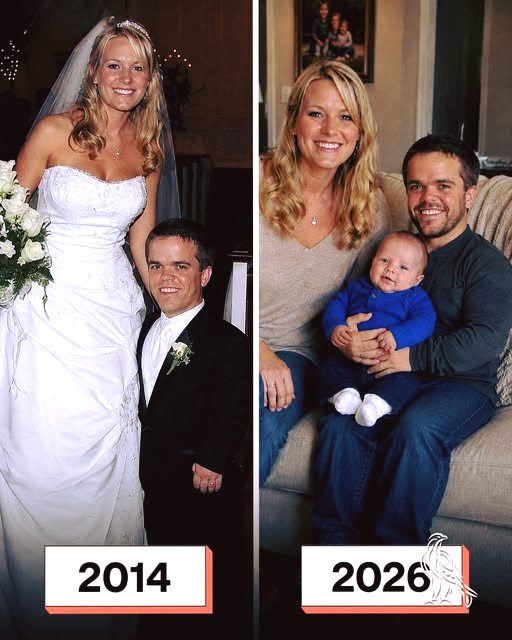
My parents had always hidden their cruelty behind humor, but over time it became obvious that their “jokes” were really steady, intentional humiliation. My husband Jordan was their favorite target, especially when it came to his height and physical condition. At family gatherings, they would make remarks wrapped in laughter, as if everyone was supposed to treat it as harmless entertainment. Eventually, it turned into a pattern I could no longer ignore, even though I kept trying to tell myself it was just their way of speaking.
What hurt most wasn’t only what they said, but how comfortable they were saying it in front of others. They acted as if their words had no impact, even when the effect was obvious. Jordan never responded with anger. He stayed calm, composed, and respectful, even when the intent behind the comments was clearly to embarrass him. He was born with achondroplasia, a form of dwarfism, but it never defined who he was. He was an architect with an exceptional ability to visualize structures and spaces in ways others couldn’t.
I often watched him work in quiet focus, turning simple ideas into designs that felt alive. To me, he represented everything my parents failed to understand about real strength. To them, though, he was still someone they felt entitled to mock. I can still remember our wedding day clearly. My mother arrived already uncomfortable—not because she was unhappy for me, but because she couldn’t hide her embarrassment about Jordan.
She seemed more concerned with appearances than with my happiness. My father tried to appear polite, but there was always a sharp edge in his tone, like every sentence carried a hidden insult. I kept hoping they would set that aside for one day so I could enjoy something important without tension following me everywhere.
During the reception, my father eventually stood up with a glass and asked for everyone’s attention. The room quieted without knowing what was coming. He made a toast that quickly changed the mood. Framed as humor, it was clearly meant as a jab—he joked about our future children and their height, getting a few uncomfortable laughs from guests unsure how to respond. I remember going rigid as I looked at Jordan, who simply held my hand under the table.
He didn’t react, but I could feel everything he was holding back. After the wedding, things didn’t improve. They became more subtle, but also more constant. My parents continued making remarks at dinners and gatherings, always aimed at Jordan in some disguised form. One night, Jordan mentioned that he had spent part of his childhood in an orphanage after being abandoned. I expected at least a moment of empathy.
Instead, they exchanged looks and laughed. That was the moment I understood they weren’t going to change. It wasn’t ignorance anymore—it was choice. Over time, I pulled away emotionally and socially. I stopped sharing details of my life and limited contact. Every interaction felt like I was constantly defending the person I loved.
Jordan never pushed me to cut them off, but I could see the effect it had on him. Still, he focused on his work and slowly built his architecture firm into something successful and respected. He surrounded himself with people who valued ability and character over appearance, creating a professional life that reflected who he truly was.
Then everything shifted when my parents’ finances collapsed. Their messages started vague—talk of business trouble and debt—then turned increasingly urgent until they eventually lost nearly everything. One evening, they showed up at our home without warning. For the first time, they didn’t carry their usual confidence. They looked worn down and uncertain.
They didn’t come to apologize. They came to ask for money—$20,000 to save their condo from foreclosure. My mother framed it as a family obligation. My father treated it like a straightforward deal. I felt years of humiliation rise up all at once. I was ready to refuse, but Jordan calmly invited them in.
For nearly two hours, they explained their situation in detail—debts, deadlines, pressure—but never once acknowledged the harm they had caused. No apology, no reflection. Just urgency. Eventually, Jordan returned with a check for the full amount, but didn’t hand it over immediately. He said there was a condition.
He asked for a real apology.
My father brushed it off first, offering something quick and hollow. My mother followed with something similar. It was obvious neither of them truly meant it. It felt transactional, like a requirement to get what they wanted. Something in me shifted then. I realized letting it end there would only repeat the same pattern.
I took the check and told them they couldn’t erase years of disrespect with empty words. I reminded them of everything they had said and done—every insult, every “joke,” every moment they treated Jordan as less. I told them that if they wanted help, they needed to understand the damage first, not just say the word “sorry.”
Then I gave them a condition: they would spend time at Jordan’s architecture firm, observing how it operated. His firm was built on inclusion, hiring people who had often been underestimated elsewhere. It valued skill, not appearance. I wanted them to see a world where people weren’t judged the way they had judged Jordan.
My father immediately rejected it, calling it insulting and unnecessary. He dismissed it as if it were beneath them. When he referred to it as a “circus,” I knew there was nothing left to interpret. I asked them to leave—without the money—and for the first time, they did.
Afterward, the silence in the house felt different. Lighter. Jordan held my hand and said quietly that I had done the right thing. And for the first time, I understood that peace doesn’t come from accepting disrespect or avoiding conflict—it comes from refusing to normalize it.
Leave a Reply