
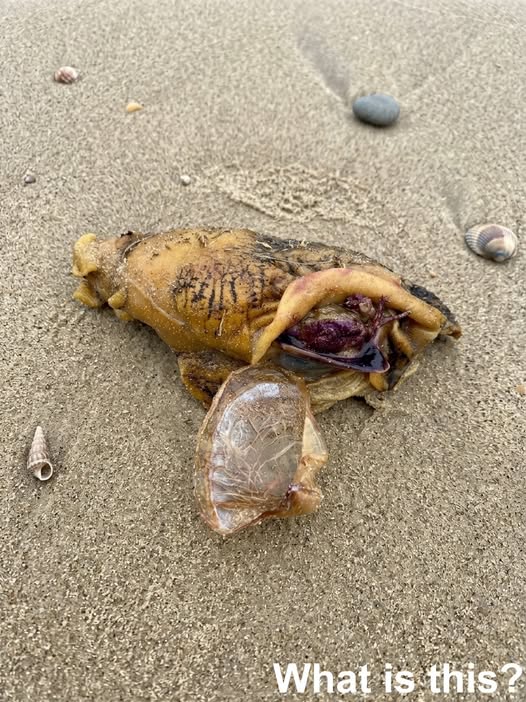
It looked wrong the moment I saw it—wrong in a way that made my stomach tighten before I could even think straight. Half-buried in the sand and grass was a swollen, misshapen form with a torn, rubbery surface that didn’t resemble anything I could place. Nearby lay what looked like a hard, shell-like fragment, as if whatever this had been was broken apart and left there by the tide. I just stood still, trying to make sense of it, my mind jumping to all kinds of unsettling possibilities, none of them quite fitting.
Eventually, curiosity won over hesitation, and I looked into what I was actually seeing.
It turned out to be a sea turtle in an advanced state of decomposition. At this stage, natural processes can dramatically change how a body looks—gases cause bloating, skin and tissue break down, and parts of the shell or body can separate, making it appear almost unrecognizable. What seemed disturbing at first glance was simply the result of time, saltwater, and nature doing what it always does along the shoreline.
Standing there with the waves rolling in, the contrast felt striking. The beach was calm and familiar, yet what had washed up told a quieter, harsher story beneath the surface—one that most people never notice when they look at the sea.
Leave a Reply