
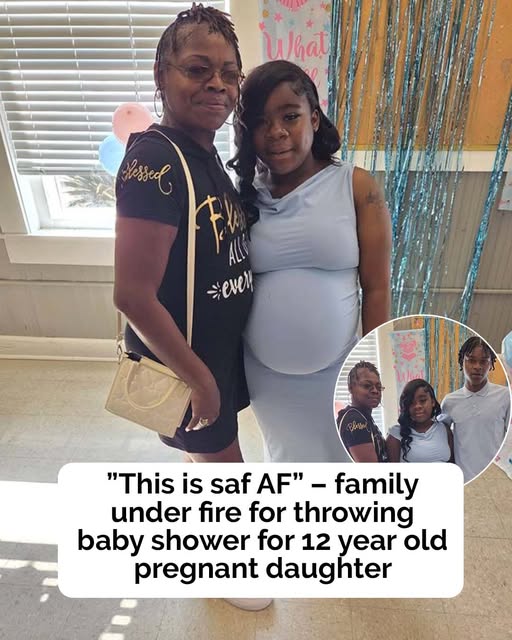
A Mississippi family baby shower has unexpectedly become the focus of a nationwide online debate after photos from the event began circulating far beyond their original Facebook audience. What was meant to be a private family celebration quickly turned into viral content across multiple social media platforms, prompting wider discussions about teen pregnancy, public reaction, and the ethics of sharing personal moments online. The images were first posted on April 27 by Greenwood resident Sheila Marble.
In the original Facebook post, Marble appeared with a visibly pregnant teenage girl, accompanied by a caption that described the moment in heartfelt, family-centered terms. The photos showed a typical baby shower setting, complete with decorations, balloons, and themed details that reflected a traditional celebration. Initially, the post remained within a small social circle, where reactions were mostly supportive or neutral, treating it as a personal milestone rather than a public controversy.
Viral spread across platforms
Everything changed on April 29, when screenshots of the post were reshared on X (formerly Twitter). Once the images entered a larger public space, engagement skyrocketed. Within a short time, the post reached millions of views, rapidly shifting from a private family moment to a widely discussed online topic.
As visibility increased, so did commentary. Users began reacting not only to the celebration itself but also to what they believed it represented. The discussion quickly expanded beyond the original context, fueled by reposts, reactions, and interpretations from different audiences.
Divided public reaction
Online responses became sharply split. Some users expressed concern about the apparent age of those involved, questioning whether it was appropriate to publicly celebrate a teenage pregnancy. Critics argued that such imagery could unintentionally normalize teen pregnancy or send confusing social signals.
Others focused on the nature of the celebration itself, suggesting that baby showers may feel uncomfortable or inappropriate in situations involving very young parents. For them, the issue was less about the individuals and more about how society frames and responds to teen pregnancy publicly.
At the same time, many users pushed back against the criticism, calling for empathy and restraint. They emphasized that teenagers in such situations often face complex challenges and argued that public judgment could add unnecessary emotional strain on families already dealing with sensitive circumstances.
Wider social conversations
As the debate grew, it expanded into broader discussions about teen pregnancy in the United States. Users referenced topics such as education, access to reproductive healthcare, and the role of community support systems.
The conversation also touched on sex education policies and how young people are prepared for relationships and reproductive health decisions. In this way, a single viral post became a trigger for ongoing national conversations about prevention, support, and responsibility.
Privacy and digital ethics
Another major concern raised was the ethics of sharing personal images involving minors. While the original Facebook post appeared to be shared within a limited circle, its redistribution across platforms raised questions about consent and digital boundaries.
Many commenters pointed out that once images begin circulating widely online, they are difficult to control or remove. This has led to growing concern about how quickly private family content can become public without clear permission.
Loss of context in viral content
As the post continued to spread, its original meaning became increasingly fragmented. Different platforms and users interpreted the images in different ways, often detached from the family’s original intent.
This reflects a common pattern in social media virality, where content is reshaped through repetition, commentary, and reinterpretation. Over time, the original context can be overshadowed by public discussion and speculation.
Ethics of online participation
The situation also raised broader questions about how people engage with sensitive content online. While social media encourages open discussion, many users highlighted the importance of approaching such topics with caution, especially when minors are involved.
Some emphasized avoiding assumptions or unverified claims, while others focused on maintaining respect for the individuals at the center of the story. The balance between public conversation and personal privacy remains a recurring challenge in digital spaces.
Conclusion
What began as a private baby shower in Mississippi has evolved into a nationwide online debate after going viral. The situation has sparked conversations about teenage pregnancy, social judgment, and the responsibility that comes with sharing personal content in the digital age.
Although opinions remain divided, the incident highlights how quickly private moments can spread online, how easily context can be lost, and how deeply social media can influence public discourse.
Leave a Reply