
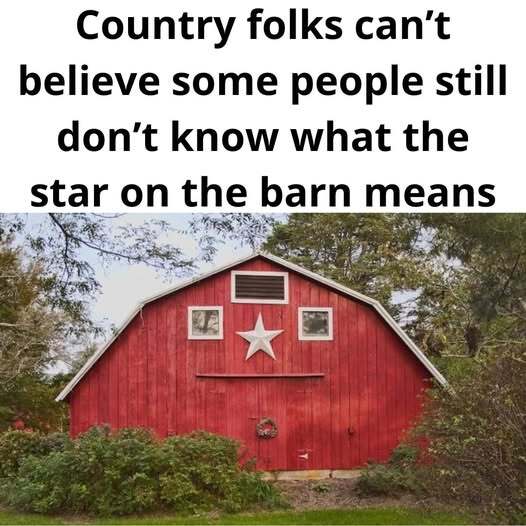
Before they became decorative items, barn stars were part of the folk traditions of Pennsylvania Dutch farmers, blending Old World beliefs with the realities of life in a new land. These stars were never just decoration—each one was chosen with intention. The number of points, the colors, and where it was placed could all carry meaning, whether to invite protection from harsh weather, encourage healthy livestock, or ensure a good harvest. Many of the designs were closely tied to hex signs and quilt patterns, combining geometry, faith, and superstition into symbols believed to guard the farm.
As time passed, the original fear of spirits and the need for protection slowly faded, but the stars endured. What once served as protective symbols gradually became family traditions, then decorative accents, and eventually popular farmhouse style elements. Today, a metal star on a porch or a painted design on a barn is often chosen for its aesthetic appeal, but it still carries a quiet connection to its origins. Each one reflects a lingering memory of early farmers who saw meaning in every detail and believed that work, hope, and beauty belonged together in the same space.
Leave a Reply