
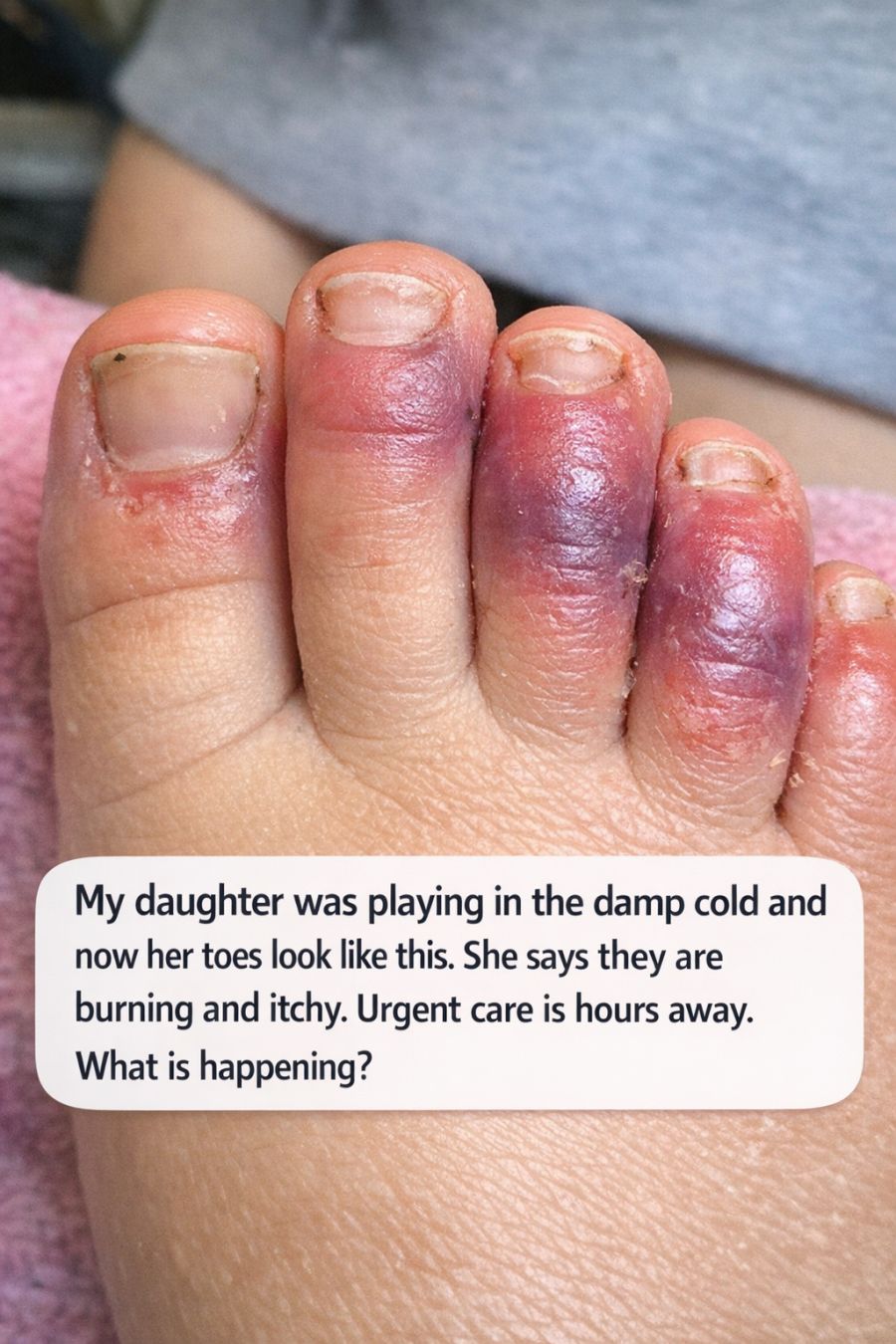
What you’re likely looking at is not frostbite, but chilblains—a painful skin reaction triggered by cold, damp exposure followed by warming up too quickly. Small blood vessels in the skin can react abnormally, leading to inflammation and leakage. This often causes toes or fingers to become red, swollen, itchy, or burning within hours after being outside in the cold.
Children and teenagers are more prone to this since their circulation is still developing, and they may not notice early discomfort while playing outside.
At home, the focus should be on gentle warming: keep the area dry, wrap it in warm socks or blankets, and use a comfortably warm room. Avoid direct heat sources, hot water, or rubbing the skin, as these can worsen irritation. Encourage light movement to help circulation and keep the feet dry.
Keep a close eye for warning signs like blisters, increasing pain, spreading redness, or any discharge—those would need medical attention. A clinician can confirm whether it’s chilblains or something more serious like frostbite or infection and recommend treatment if needed. With proper care and protection in cold weather, chilblains usually heal without complications.
Leave a Reply