
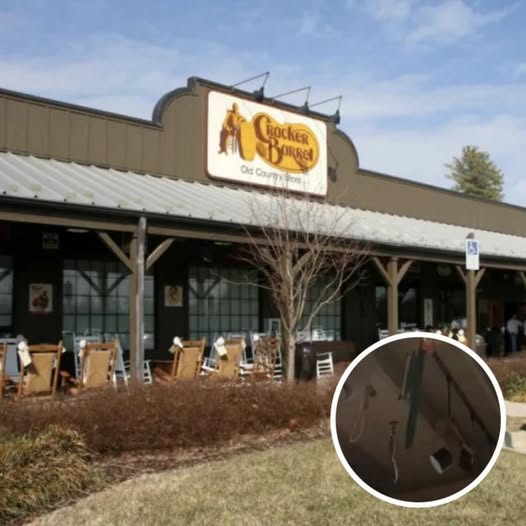
Photos from an East Windsor Cracker Barrel sparked immediate backlash: coiled cords hanging in a way that many said echoed the horrific imagery of America’s lynching history. Although the company later explained the items were simply wrapped cords from an antique soldering iron, the explanation raised a deeper concern—how could something resembling such a painful symbol remain on display in a public setting for more than two decades without being questioned? For many Black patrons, the clarification did little to ease the emotional impact; instead, it underscored how often their lived experiences go unrecognized in everyday spaces.
What unfolded next inside the restaurant was more measured than the storm online. Community advocates sat down with manager Mark Smith, who acknowledged that he might not perceive the display the same way others do. The decoration was promptly removed, and calls intensified for a company-wide review of similar items. In the end, the moment became about more than a single piece of décor—it pointed to the ongoing need for awareness, empathy, and a willingness to confront difficult historical associations, even in the most ordinary environments.
Leave a Reply