
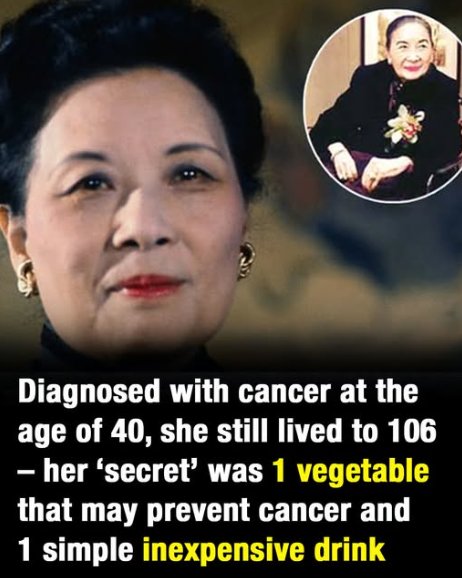
Soong Mei-ling — widely known as Madame Chiang — wasn’t just the elegant wife of Chiang Kai-shek. She was a formidable figure in her own right, influencing politics, diplomacy, and humanitarian efforts throughout the 20th century.
Yet beyond her historic role, one aspect of her life continues to fascinate people: her remarkable longevity.
Diagnosed with cancer at around 40, she overcame the illness and went on to live to 106, passing away peacefully in New York in 2003. Many have wondered what contributed to such a long and vibrant life — and the answer appears to lie in a combination of discipline, routine, and surprisingly simple habits.
Her daily lifestyle was carefully structured. She began each morning with a glass of cold water with lemon and followed a pattern of eating five small meals a day, stopping before she felt completely full. This “eat until you’re about 70% satisfied” approach aligns with what modern nutrition experts now recommend for longevity and metabolic health.
Mental well-being was just as important. She dedicated time every day to reading, painting, and reflection — habits that helped keep her mind active well into old age. Her sleep routine was equally consistent, typically from 11 p.m. to 9 a.m., reinforcing the importance of rest and regularity.
But one detail from her diet stands out more than most: celery.
This humble vegetable played a regular role in her meals and was something she genuinely valued. Packed with fiber, antioxidants, and beneficial plant compounds, celery supports heart health, digestion, and overall wellness. Compounds like apigenin and luteolin — both natural flavonoids — have been studied for their anti-inflammatory and potential disease-fighting properties.
While no single food guarantees a long life, her reliance on something so simple highlights an important idea: consistency matters more than complexity.
Of course, her legacy extends far beyond health. Fluent in English and educated in the United States, she became a powerful voice for China on the global stage — addressing Congress during World War II, meeting world leaders, and appearing on the cover of major publications. She also devoted herself to philanthropy, founding schools for war orphans and supporting countless charitable efforts.
Even in her later years, she remained intellectually and creatively active, holding art exhibitions in New York after the age of 100.
Her life offers a broader lesson: longevity isn’t just about diet — it’s about balance. A structured routine, mental engagement, mindful eating, and self-discipline all played a role in helping her live not just longer, but better.
And sometimes, even something as ordinary as celery can be part of an extraordinary life.
Leave a Reply