
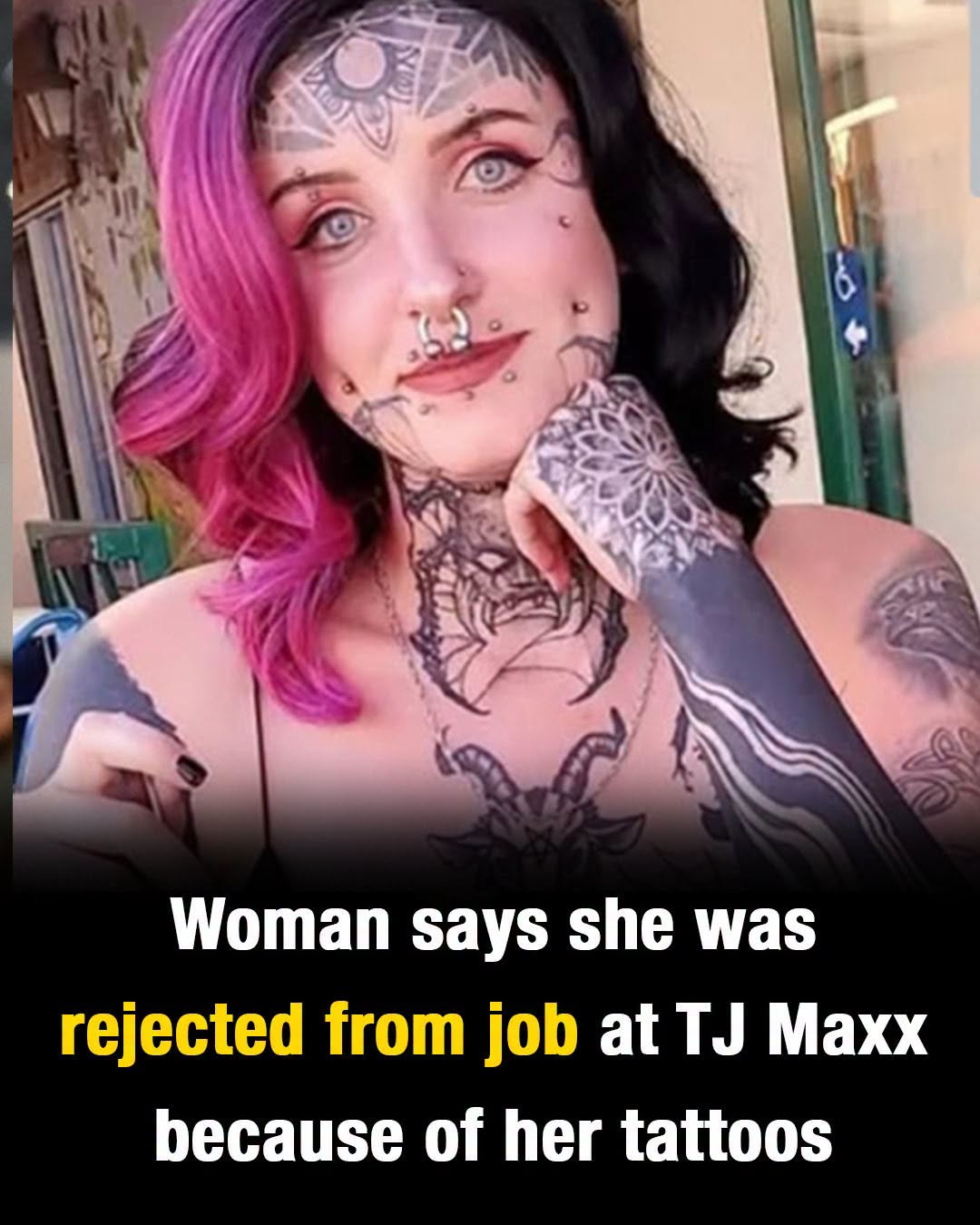
A 24-year-old woman has ignited a heated online debate after खुलly sharing her frustration over being turned down for a retail job at TJ Maxx—and the reaction she received wasn’t what she anticipated.
Ash Putnam, known on TikTok as ashxobrien, posted a video explaining that her application was rejected via an automated email rather than a personal response. The clip quickly went viral, drawing millions of views and sparking a wave of mixed reactions.
In the video, Putnam says she later visited the store to ask about the decision. According to her, a hiring manager told her that other candidates had more experience. Still, she remained skeptical.
With visible tattoos across parts of her face and body, along with multiple facial piercings, Putnam questioned whether her appearance may have influenced the outcome. While she says the manager denied that her look played a role, she admitted she wasn’t fully convinced.
Turning to her audience, she raised a question that struck a chord with many: how are people supposed to gain experience if even entry-level jobs require it? She also expressed frustration that her appearance might overshadow her abilities, despite her belief that it has no impact on her work ethic.
The video quickly became a lightning rod for discussion.
Some viewers were blunt, arguing that facial tattoos can limit job prospects—especially in customer-facing roles. Others shared more nuanced takes, saying tattoos in general are widely accepted today, but facial placements still carry a stigma in many industries.
Several commenters claiming hiring experience weighed in as well. One self-identified HR supervisor said many companies would hesitate to hire someone with highly visible facial tattoos for front-facing positions. Another user, who said they previously worked as a hiring manager at TJ Maxx, echoed that view, suggesting that appearance can influence decisions, even if it’s not officially stated.
At the same time, others defended Putnam, arguing that personal style should not outweigh skills or attitude. Supporters pointed out that workplace norms are evolving, and self-expression is becoming more accepted, especially among younger generations.
Putnam has stood by her perspective, saying her appearance reflects creativity and individuality—not a lack of professionalism. She also suggested that companies may need to rethink outdated standards as cultural attitudes continue to shift.
The situation highlights a broader tension in today’s job market. While tattoos have become more common and accepted in many fields, industries like retail and customer service often still maintain more traditional expectations.
From an employer’s standpoint, decisions may be influenced by brand image and customer perception. From a candidate’s perspective, those same standards can feel limiting—especially when they don’t seem directly tied to job performance.
Ultimately, the debate sits at the crossroads of changing cultural norms and long-standing workplace expectations. Whether this case is seen as bias or simply current hiring reality depends on perspective—but conversations like this are clearly shaping the future of what professionalism looks like.
Leave a Reply