
I had been running on empty long before I admitted it to myself.
Twelve-hour days, sometimes fourteen. Calls stacked on top of meetings, deadlines spilling into weekends. And still, every month without fail, I showed up with a check—because the woman who raised me needed it, and that was reason enough not to question anything else.
Linda never asked to be my mother.
She just became one.
After my mom died when I was eight, she stepped in quietly. She didn’t try to replace anything or rewrite the past. She simply stayed—steady, patient, present—until one day I realized she wasn’t “Linda” in my mind anymore.
Then my dad passed two years ago, and it was just us.
I wish grief had made me better—more present, more intentional.
It didn’t.
It made me efficient.
I called when I could. Visited when I could. Told myself it was enough, because it had to be. Because I was tired. Because life was loud and always asking for more.
Then her health began to slip.
Nothing dramatic—just small, quiet changes. Fatigue. A stumble she brushed off too easily. A bruise she laughed about but couldn’t quite explain.
I started looking into home care.
She shut it down.
One Sunday, she told me she’d already found a place—an assisted living facility. She had toured it, chosen it, decided.
Then she told me the cost.
$2,500 a month.
She said she could cover part of it.
I didn’t let her finish.
“You took care of me for thirty years,” I said. “Now it’s my turn.”
That part was true.
What wasn’t true came after.
She said the billing was complicated. That long-term residents had special arrangements. That it would be easier if I just gave her the money directly and she’d handle everything.
It sounded like her—practical, low-drama.
So I believed it.
Every month, I handed her a check.
Same routine. Same quiet exchange. I’d stay for an hour—sometimes less.
Every now and then, she’d say, “Stay a little longer.”
And I’d say, “Next time.”
There was always that flicker in her eyes before she hid it.
And I always left anyway.
Then one Thursday, a meeting got canceled, and I showed up early.
I wasn’t meant to hear anything.
But I did.
She was in the sunroom, talking to another resident. Laughing softly, the way she used to at home. Then she said something that stopped me cold.
“She thinks she’s paying for me to be here. It’s the only reason she comes every month without fail.”
I froze.
For a second, I thought I’d misunderstood.
I hadn’t.
I stepped back before she could see me. My body felt unsteady, like I’d missed a step in the dark.
A few minutes later, she saw me.
“You’re early,” she said.
I asked her to come to her room.
There was no softening it.
“I heard you,” I said.
She tried to deny it—just for a moment. Just enough to gather herself.
Then she sat down slowly.
“Am I paying for you to live here or not?” I asked.
“Not exactly,” she said.
I let out a sharp laugh.
“That’s not an answer.”
But I already knew.
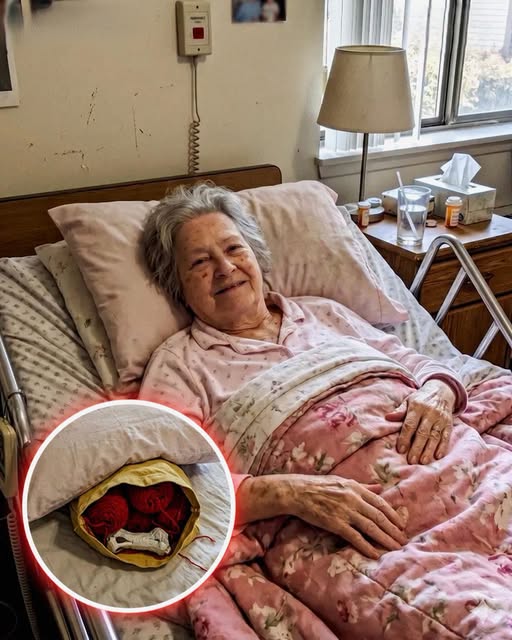
The truth was sitting in a knitting bag in the corner of her room.
Yarn. Needles. And underneath—folders.
Statements. Deposits. Investment summaries.
Every check I had given her—every single one—was there.
Untouched.
Growing.
She hadn’t spent any of it.
Not a dollar.
I stood there, trying to make sense of it.
Then she told me why.
“It was the only way I knew you would keep coming.”
That’s when something in me gave way.
Not because of the money.
Because of the reason.
After my dad died, she said, she felt me drifting. Not all at once—just little things. Shorter visits. Calls pushed back. “Next week” becoming routine instead of promise.
“I wanted you to want to,” she said.
She hadn’t asked for more time because she didn’t want to beg.
She was lonely.
And she didn’t know how to say it.
I wanted to be angry in a simple way.
But it wasn’t simple.
Because she wasn’t entirely wrong—I had been giving her what was left of me, not what she deserved.
“What you did was wrong,” I said.
“Yes.”
“It was selfish.”
“Yes.”
“It hurt me.”
“I know.”
There was no defense in her. No excuses. Just honesty.
And somehow, that made it harder.
I asked what happened next.
She said she would give the money back. All of it.
I believed her.
But it didn’t fix the feeling.
Because this wasn’t about money anymore.
It was grief.
Grief for the lie.
And grief for the reason behind it.
I sat down because my legs couldn’t hold me.
We stayed like that for a long time.
Finally, I said, “You should have just told me you were lonely.”
“I know,” she whispered.
I looked at her—really looked—and saw someone who had spent her life giving without asking, loving without demanding, and didn’t know how to ask for something as simple as time without feeling like a burden.
“I’m not over this,” I said.
“I know.”
“I might be angry for a while.”
“I understand.”
Then I took her hand.
“But don’t ever talk like I’m not still your daughter.”
That broke her.
And something in me shifted too.
Because underneath everything, the truth hadn’t changed.
“For the record,” I said quietly, “you are my real mother. In every way that matters.”
We sat there for hours.
No check. No transaction. No pretending.
Just two people who hurt each other without meaning to.
Love doesn’t erase betrayal.
And good intentions don’t make something like this right.
But I understand it now.
She didn’t take the money because she needed it.
She held onto it because she was afraid that one day, I would stop showing up—and she wouldn’t be able to pretend she hadn’t seen it coming.
Leave a Reply