
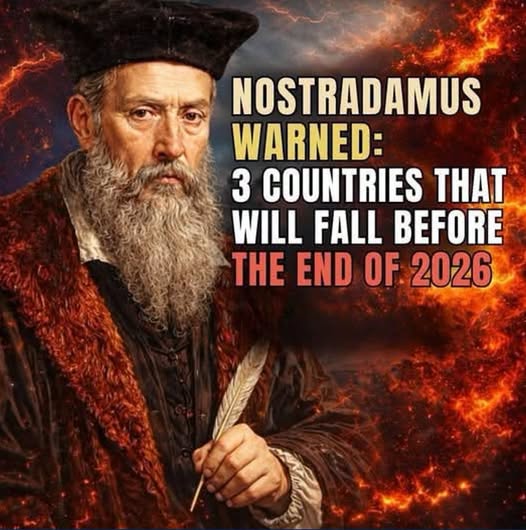
Nostradamus and Modern Interpretations: Speculation About Global Conflict and the Future
For centuries, the writings of Nostradamus have captured the imagination of historians, skeptics, and curious readers alike. Born Michel de Nostredame in the 16th century, he became known for his mysterious quatrains—short, symbolic verses that many believe hint at major world events. From wars and revolutions to natural disasters, his work continues to spark debate over whether it reflects genuine foresight or simply clever ambiguity.
In recent years, interest in his prophecies has surged again, especially as people attempt to connect his writings to current global tensions. Some modern interpretations suggest that Nostradamus may have hinted at a large-scale conflict in our era, even going as far as claiming that certain nations could collapse before the end of 2026. However, these claims remain speculative and are not backed by solid evidence, making them more reflective of present-day concerns than historical accuracy.
Understanding Nostradamus: Context Is Key
To make sense of these interpretations, it’s important to understand how Nostradamus wrote. His works, compiled in Les Prophéties, consist of cryptic four-line verses filled with metaphors, mixed languages, and layered symbolism.
Most scholars agree that his writing style was intentionally obscure. This allowed his words to be interpreted in many different ways, often being linked to events only after they had already happened. While some believe he predicted events like the French Revolution or World War II, these connections were typically made in hindsight.
Because of this, assigning precise predictions—especially with specific deadlines like “before 2026”—requires a significant leap in interpretation rather than clear textual evidence.
The Idea of a Global Conflict
One recurring theme often associated with Nostradamus is widespread conflict or a major war. In modern discussions, this is sometimes framed as a potential “third world war,” even though Nostradamus never used such terminology.
Some interpretations suggest his verses describe:
- Rising tensions between major powers
- Economic instability leading to unrest
- Unexpected shifts in alliances
- Conflicts expanding across regions
These ideas, however, are not unique to Nostradamus—they are patterns seen repeatedly throughout history. This makes it easy to connect his words to current global events, even when the connection may be coincidental.
Claims About Countries “Falling”
A particularly eye-catching claim circulating online is that Nostradamus predicted the سقوط (fall) of three countries before the end of 2026. These claims often appear in dramatic headlines but rarely point to consistent or verifiable sources.
Looking closer, several issues stand out:
- No clear reference to modern nations
Nostradamus did not name countries as we know them today. Attempts to match his symbols to modern nations vary widely and often contradict each other. - Vague terminology
Words like “fall” or “collapse” can mean many things—from economic hardship to political instability—not necessarily the complete downfall of a country. - Lack of specific timelines
His writings rarely include exact dates. Assigning a fixed deadline like 2026 is usually a modern interpretation rather than something rooted in the original text.
Why These Interpretations Spread
Despite the lack of solid evidence, these theories continue to gain attention for a few key reasons:
- Global uncertainty
Economic shifts, political tensions, and conflicts can make people more receptive to predictions that seem to explain what’s happening. - The appeal of mystery
Nostradamus’s cryptic style invites curiosity and endless reinterpretation, especially in today’s fast-moving digital world. - Confirmation bias
People are more likely to believe interpretations that align with their existing views or concerns.
A More Realistic Perspective
Rather than relying on centuries-old prophecies, modern experts analyze global trends using data and geopolitical insight. While the world does face challenges, predictions about the imminent collapse of specific countries within a short timeframe are generally not supported by credible evidence.
Analysts focus on factors such as:
- Economic performance
- Political stability
- International relations
- Military strength
- Social cohesion
These provide a far more reliable picture of global stability than symbolic interpretations from the 1500s.
Media and the Spread of Sensational Claims
Modern media also plays a role in amplifying these ideas. Dramatic headlines about collapsing nations tend to attract more attention and engagement.
Responsible content, however, should:
- Avoid exaggeration
- Present balanced viewpoints
- Clearly separate speculation from fact
- Encourage critical thinking
Discussing Nostradamus can still be engaging—but it should inform rather than alarm.
Entertainment vs. Reality
For many, Nostradamus is best understood as a historical and literary figure rather than a literal predictor of the future. His writings can be fascinating to explore, but problems arise when speculative interpretations are presented as certainty.
Claims about countries collapsing within a specific timeframe can create unnecessary fear and misinformation.
Looking Ahead
The future is shaped by human decisions, not predetermined prophecies. While challenges will always exist, history shows that nations are capable of adapting and overcoming crises.
Instead of focusing on predictions of سقوط, it’s more useful to consider:
- Strengthening international cooperation
- Addressing global challenges like climate change
- Promoting diplomacy to prevent conflict
These factors have a far greater impact on the world’s future.
Conclusion
Nostradamus remains a compelling figure whose writings continue to inspire curiosity. However, claims that he predicted the fall of specific countries before 2026 are not supported by clear evidence from his original texts.
Ultimately, such interpretations say more about modern anxieties than about the future itself. By approaching them with a critical mindset, readers can appreciate the mystery of Nostradamus without being misled by sensational claims.
In the end, the future isn’t written in cryptic verses—it’s shaped by the choices we make today.
Leave a Reply