
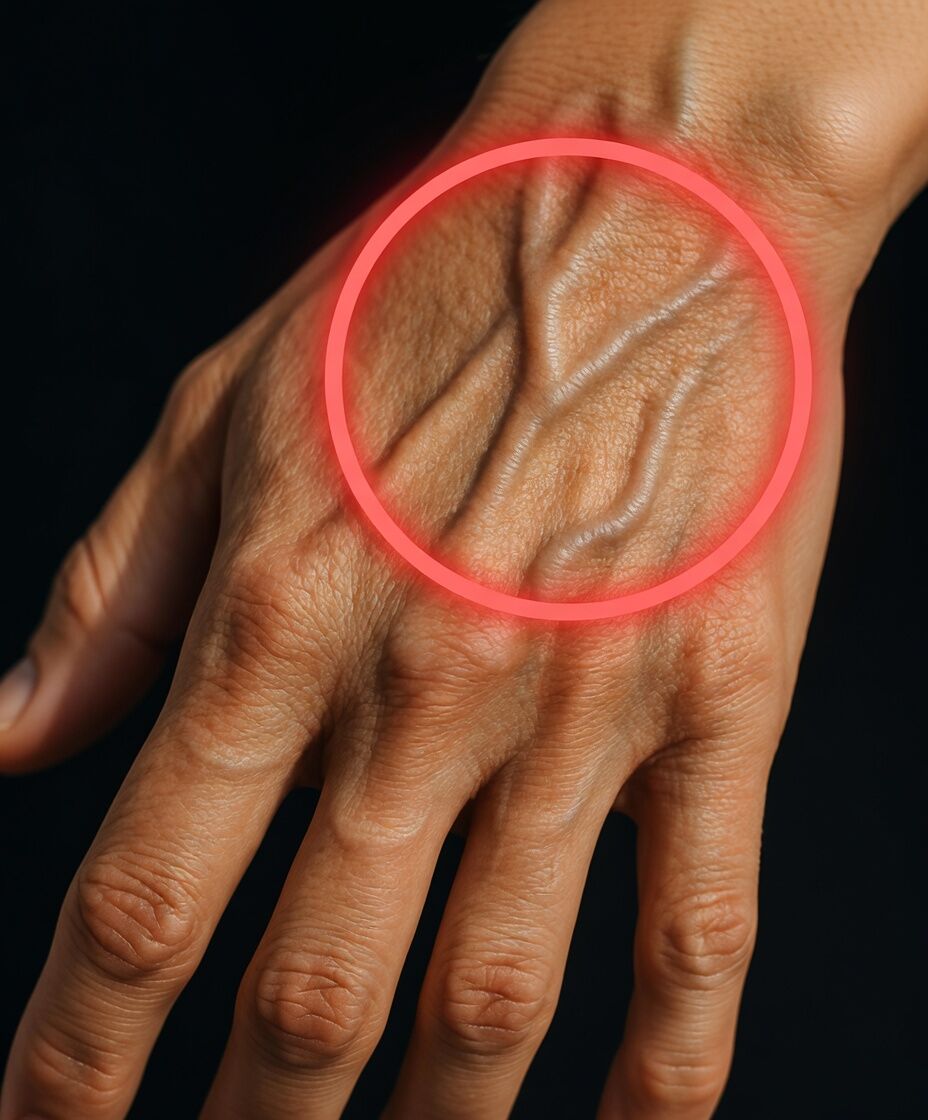
What Visible Veins Can Reveal About Circulation and Overall Health
Noticing veins that appear enlarged or more visible on the hands, arms, legs, or feet can sometimes cause concern. For some people, the change feels sudden and unexpected, while for others it develops gradually and is often dismissed as a normal part of aging or body composition.
In many situations, visible veins are completely harmless. They can be influenced by low body fat, regular physical activity, or even warm weather. However, veins do not usually become more prominent without some underlying reason. The circulatory system is constantly adapting to internal and external factors such as hydration, blood pressure, hormones, movement, and general health.
When veins become raised, twisted, or noticeably enlarged, it may indicate changes in circulation or vascular function. While these changes are often benign, in some cases they can reflect underlying conditions that develop slowly over time.
Understanding why veins become more visible can help distinguish normal variations from signs that may require medical attention.
The Role of Veins in the Circulatory System
Veins are responsible for carrying blood back to the heart. Unlike arteries, which transport blood under high pressure away from the heart, veins rely on muscle movement and one-way valves to push blood upward against gravity.
When these valves weaken or pressure inside the veins increases, blood can begin to pool. This leads to expansion of the vein walls, making them more visible under the skin.
Sometimes this process is temporary and linked to lifestyle or environmental factors. In other cases, it may reflect long-term changes in vein structure and function.
Common Reasons Veins Become More Visible
Several everyday factors can make veins appear more pronounced:
Aging
As the body ages, vein walls gradually lose elasticity. The valves may also weaken, allowing small amounts of blood to flow backward. This increases pressure and can cause veins to bulge.
Genetics
Family history plays a significant role in vein appearance and health. People with relatives who experience varicose veins are more likely to develop them as well.
Low Body Fat
A thin layer of fat normally cushions veins beneath the skin. When body fat is low, veins naturally become easier to see. This is common in athletes and lean individuals.
Physical Activity
Exercise increases blood flow to muscles, causing veins to expand temporarily. This is why veins often look more prominent during or shortly after physical activity.
Heat
Warm temperatures cause blood vessels to widen to help regulate body temperature, making veins appear more visible.
Dehydration
Low fluid levels can reduce blood volume and make circulation less efficient, which may cause veins to stand out more.
Hormonal Changes
Hormonal fluctuations during pregnancy, menopause, or medication use can affect circulation. Pregnancy in particular often leads to more visible veins due to increased blood volume and pressure.
When Swollen Veins May Indicate a Medical Condition
While many causes are harmless, certain vein changes may point to underlying health issues.
Varicose Veins
These occur when vein valves stop working properly, allowing blood to pool. The veins may become enlarged, twisted, and sometimes painful, especially in the legs.
Chronic Venous Insufficiency
This condition develops when veins struggle to return blood efficiently to the heart. Symptoms may include swelling, skin changes, heaviness, and persistent visible veins.
Blood Clots
A deep vein clot (deep vein thrombosis) can cause swelling, redness, warmth, and pain, usually in one leg. This is a serious condition that requires urgent medical attention.
Superficial Thrombophlebitis
This involves inflammation in a surface vein, often felt as a tender, firm line under the skin. While less dangerous than deep clots, it should still be evaluated.
Heart or Liver Conditions
In some cases, circulation problems linked to the heart or liver may contribute to visible or swollen veins, often alongside symptoms like fatigue, swelling, or fluid retention.
Why Location Matters
The area where veins become visible can provide helpful clues about their cause.
Hands:
Visible veins here are commonly linked to aging, thin skin, or physical activity and are usually harmless unless accompanied by pain or sudden changes.
Leave a Reply