
Optical illusions have long intrigued researchers and the public alike because they reveal something fundamental about how the human mind works: we don’t simply see the world—we interpret it. Rather than acting like a camera, the brain actively constructs meaning from visual input, sometimes producing multiple valid interpretations from a single image.
These illusions are more than just entertaining puzzles. They offer insight into areas like attention, perception, and cognitive processing, showing how the brain filters and organizes information in real time. Just as physical exercise supports the body, mental challenges—such as pattern recognition tasks and illusions—help maintain cognitive flexibility and sharpness.
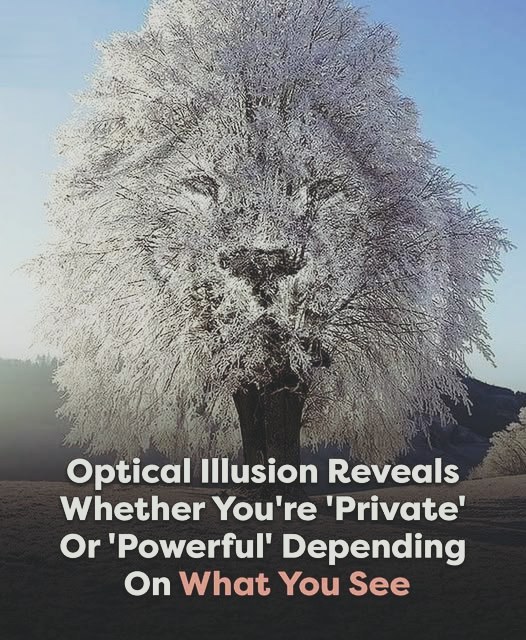
A well-known example is the image that can appear as either a tree or a lion. Some people immediately notice the branching structure of a tree, while others quickly recognize the outline of a lion’s face. This difference doesn’t mean one person is right and the other is wrong—it simply reflects how each brain prioritizes visual cues.
When we look at an image, light is converted into signals that the brain processes almost instantly. But when shapes are ambiguous or overlapping, the brain has to “decide” what it’s seeing. That decision is influenced by attention, past experiences, and the brain’s natural tendency to search for familiar patterns.
Although it’s popular online to link what you see first to personality traits, there’s no strong scientific evidence supporting that idea. What you notice first is more closely related to visual focus and cognitive style than to fixed aspects of personality. For instance, some people naturally process overall shapes first (a “big picture” approach), while others focus on finer details.
What makes illusions so valuable is their ability to expose this hidden process. They show that perception is not passive—it’s shaped by assumptions, context, and mental shortcuts. In everyday life, this helps us make quick decisions, but it can also lead to misunderstandings when we rely too heavily on first impressions.
The tree-and-lion illusion is a simple but powerful reminder that reality is not always as straightforward as it seems. Just as one image can hold multiple interpretations, real-world situations can also look very different depending on perspective.
By engaging with optical illusions, we become more aware of how our minds work—how quickly we judge, how easily perception can shift, and how important it is to stay open to alternative viewpoints. In that sense, illusions are more than visual tricks; they’re tools for understanding the flexible, interpretive nature of human thinking.
Leave a Reply